At 7:40 a.m. on a wet Ann Arbor road, the useful question is not what is level 3 autonomous driving according to a launch presentation. It is this: which part of the driving task has the system actually accepted, under which conditions, and what happens when those conditions disappear? Level 3, or conditional driving automation, is a defined step above driver assistance, but it is not a robotaxi and it is not a license to ignore the road forever.
The engineering definition
What is level 3 autonomous driving in the SAE framework? A system performs the complete dynamic driving task inside a defined operational design domain, or ODD. That domain can restrict road type, speed, weather, traffic conditions, geography, or time of day. While the system is active within that ODD, it handles steering, braking, acceleration, lane changes when supported, and the monitoring needed to drive safely.
The important distinction is responsibility. In Level 2, the human must continuously supervise the system because the human remains responsible for the driving task. In Level 3, the automated driving system is responsible while it is engaged and operating within its ODD. If it reaches a situation it cannot handle, it issues a transition demand. The human must then take over, but the system is expected to provide enough warning and remain capable of managing the vehicle during the transition.
That last sentence is where marketing language tends to blur the edges. Level 3 does not mean the vehicle can drive anywhere. It means responsibility changes conditionally, inside a carefully bounded envelope. Outside that envelope, the vehicle must not pretend otherwise.
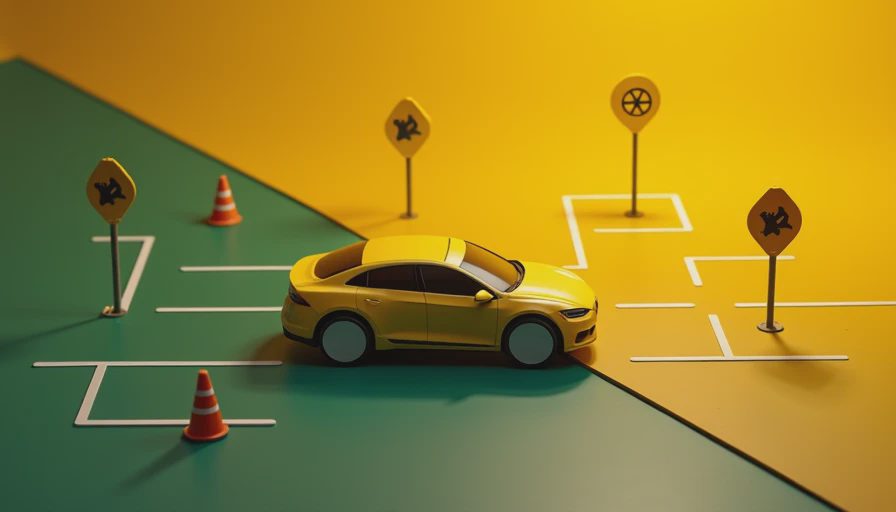
What the driver can and cannot do
A practical answer to what is level 3 autonomous driving starts with the fallback-ready user. During a valid Level 3 session, the driver may be allowed to look away from the roadway or perform a non-driving activity, depending on the system and local rules. The driver still needs to be physically able to resume control after a request. Sleeping, leaving the seat, or treating the car as an unattended chauffeur is not a reasonable interpretation.
This creates a different human-machine interface problem from Level 2. A Level 2 system watches the driver continuously because the driver must supervise continuously. A Level 3 system must communicate its operating limits, engagement status, transition warnings, and remaining response time clearly enough that a distracted person can reconstruct the situation quickly. A warning that technically exists but arrives during a sharp curve or heavy rain is not a successful fallback design.
The exact transition behavior matters. Does the car slow smoothly? Does it activate hazard lights? Does it pull toward a safe stopping position, or simply demand that a confused driver grab the wheel? I would score those behaviors separately rather than accepting a single “autonomous miles” number.
ODD restrictions are the real product
If you are asking what is level 3 autonomous driving before buying a vehicle, read the ODD before reading the advertised automation level. A system might work only on mapped divided highways, below a specified speed, in daylight, and when weather sensors report acceptable conditions. Another system might be limited to traffic-jam use. Those are not minor footnotes; they define when the manufacturer accepts the driving task.
Mercedes-Benz Drive Pilot is a commonly discussed production example of conditional automation, with availability and operating conditions limited by market, vehicle configuration, regulation, and approved use cases. Honda’s Traffic Jam Pilot made the same point in Japan: a Level 3 label describes a constrained capability, not universal autonomy. Availability changes, so the current owner manual and regional approval are more useful than a two-year-old video.
A good test records the boundary. Start inside the ODD, confirm that the system engages, then introduce one controlled boundary condition at a time: a road leaving the mapped network, a speed increase, poor lane markings, or a weather change. Record the distance and warning sequence. If the system disengages early and predictably, that is a strength. If it remains active after its competence has degraded, that is a severity-four or severity-five finding in my notebook.
Level 3 versus Level 2 and Level 4
The simplest comparison is responsibility, not steering-wheel behavior. Level 2 can steer and control speed, but the driver continuously supervises and remains responsible. Level 3 handles the driving task within its ODD, then asks the driver to resume when needed. Level 4 can perform the driving task without a human fallback inside its ODD, typically in a defined service area or fleet deployment. Level 5 would operate everywhere a human could drive.
This is why a vehicle that changes lanes smoothly is not automatically Level 3. Some advanced Level 2 systems from Tesla, General Motors, Ford, BMW, and other manufacturers can perform impressive maneuvers while still requiring active supervision. Capability and legal responsibility are separate variables. A system can look more competent than its formal level while still leaving the human accountable for every mistake.
When comparing systems, ask three questions. Who is responsible while the feature runs? What conditions activate it? What does the vehicle do when the driver does not respond? Those questions cut through most badge and branding arguments.
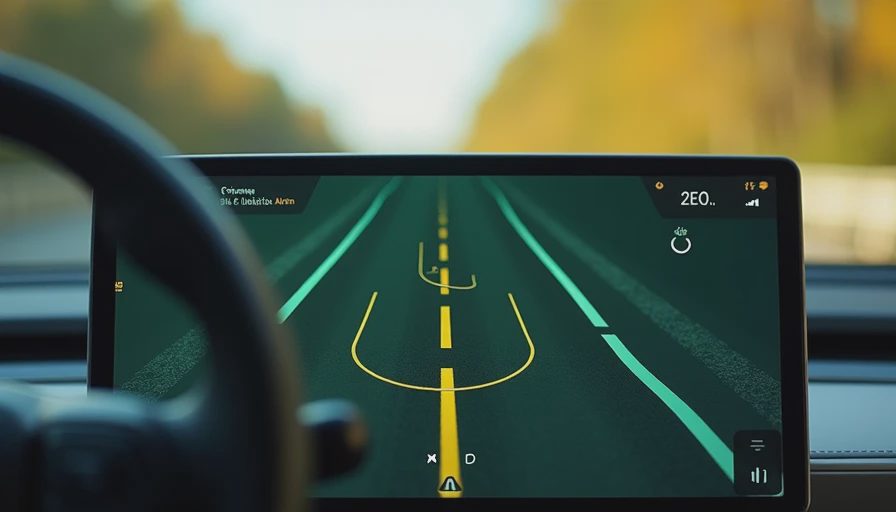
How I would test a Level 3 claim
My test harness begins with a written scenario, not a camera pointed at the dashboard. I log software version, vehicle configuration, road class, weather, traffic density, speed, engagement time, and every intervention. I repeat the same route at least three times because one clean run proves very little. A system that succeeds twice and fails once has not produced a footnote; it has produced a reproducibility problem.
For what is level 3 autonomous driving in real operation, I would test nominal driving, cut-ins, stopped vehicles, lane reductions, emergency vehicles, poor markings, sensor obstruction, and transition demands. I would also measure warning timing and deceleration. “It asked me to take over” is incomplete. The useful record says the request arrived with approximately how much time, what the roadway looked like, and whether the vehicle remained stable afterward.
My severity scale is straightforward. Severity 1 is an awkward but safe behavior. Severity 2 is a repeatable nuisance. Severity 3 requires prompt human correction. Severity 4 creates a credible collision risk. Severity 5 is an actual collision or near-collision with no reasonable recovery margin. This keeps a dramatic but harmless lane wiggle from receiving the same score as a late fallback request.
What buyers should verify
Before paying for a feature, ask the dealer or manufacturer for the operating domain, driver-monitoring rules, takeover procedure, subscription terms, and supported roads. Read whether the feature is installed, enabled, or merely promised through a future software update. Confirm whether navigation data, cellular connectivity, clear lane markings, or a particular trim level is required.
Also check the legal language. A Level 3 system does not erase insurance, licensing, maintenance, or crash-reporting obligations. Tires with poor tread, a dirty windshield, damaged sensors, or an unapproved modification can change system behavior. Save the vehicle software version after each OTA update and note whether engagement limits changed. That is the minimum useful audit trail.
So, what is level 3 autonomous driving? It is conditional automation with a bounded ODD, a temporary transfer of driving responsibility to the system, and a designed handoff back to a human. The honest evaluation is not a promotional drive on a perfect highway. It is a repeatable test at the edges, where the system says “I cannot continue” and we inspect what it does next. Your car talks. I check his homework.