At 8:10 a.m. on a cold Ann Arbor morning, I would rather inspect a 2013 model s with a scan tool and service history than accept a seller's phrase "runs great." This is an early electric vehicle, not a modern Tesla with current driver-assistance hardware. Its condition depends heavily on battery history, charging behavior, suspension wear, software support, and whether a previous owner treated it like an experiment or a commuter appliance. Your car talks. I check his homework.
What the 2013 Model S actually has
The 2013 model s arrived before Tesla's later Autopilot era. It does not have the factory sensor package associated with newer Tesla driver-assistance systems, and it should not be evaluated as if it can provide supervised highway automation. That distinction matters for both safety expectations and insurance conversations. A vehicle with adaptive cruise, lane-centering cameras, or modern emergency braking is not equivalent to an early Model S simply because both wear a Tesla badge.
Early cars were commonly sold in 60 kWh and 85 kWh configurations, with rated range figures that were impressive for the period. The 85 kWh version was generally the more desirable long-distance platform, but the badge does not tell you the present battery capacity. Age, mileage, climate, charging pattern, and time spent at high state of charge all matter. A used 2013 model s can have a healthy pack, a degraded pack, or a pack with an expensive failure developing outside the driver's view.
My first test is not a short driveway loop. I record starting battery percentage, displayed rated range, outside temperature, tire pressure, and energy use over at least 30 miles. I repeat the route if possible. A single range estimate is noisy; repeated behavior is evidence.
Battery and charging checks before purchase
The battery is the largest uncertainty in a 2013 model s purchase. Ask for service invoices, prior battery-replacement documentation, and records showing how the car was charged. A seller who says the pack is "original and perfect" but cannot show a full history has provided an anecdote, not a measurement.
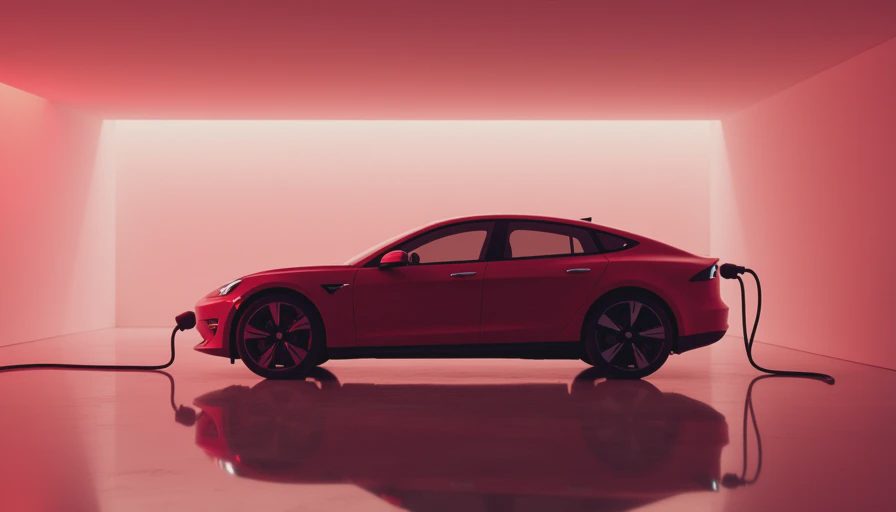
Inspect charging at home and at a public station. Confirm that the charge port opens reliably, the cable locks, the car begins charging without repeated resets, and the dashboard reports reasonable power. Test both slower AC charging and, where compatible, faster charging equipment. A failed onboard charger or damaged charge hardware can turn an apparently cheap car into a repair project costing several thousand dollars.
Also listen during low-speed maneuvering. Whining, clunks, vibration, or a sudden drop in power deserve documentation. Battery faults are not the only expensive issue. Door handles, air suspension components on equipped cars, touchscreen hardware, suspension arms, brakes, and tires can all affect the ownership budget. Set aside at least $2,000 to $4,000 for an older-car repair reserve rather than spending every dollar on the purchase price.
The safety and driver-assistance reality
The 2013 model s is a capable electric sedan, but capability is not autonomy. I would score its factory assistance as a 1 out of 5 for modern automated-driving expectations: there is no basis for treating it like a current Tesla with supervised Autopilot or Full Self-Driving features. The correct behavior is straightforward human driving with full attention, not hands-off experimentation.
That limitation is useful when comparing insurance quotes. Some insurers use vehicle safety equipment, repair complexity, claims history, location, driver profile, and coverage limits in their pricing models. A discount for advanced driver-assistance equipment should not be assumed. Ask the agent exactly which equipment qualifies, and provide the vehicle identification number rather than describing the car as simply "a Tesla."
For collision protection, compare comprehensive and collision deductibles of $500, $1,000, and $1,500. On an older 2013 model s, a high premium can approach a meaningful share of the car's market value, while a lower premium with a large deductible may leave you exposed after a crash. Liability limits are separate from damage to your own vehicle; state minimums can be inadequate when a serious injury claim is involved.
A practical inspection scorecard
I would score a candidate 2013 model s in five categories from 1 to 5. Battery and charging history gets the highest weight because replacement risk dominates the financial outcome. Mechanical condition covers suspension, steering, brakes, tires, and cooling systems. Electronics covers the touchscreen, displays, door handles, windows, climate controls, and charging interfaces. Documentation covers title status, accident records, service invoices, and software-related repairs. Finally, insurance fit covers quote availability, deductible comfort, and whether the carrier will handle Tesla-specific repairs through an appropriate shop.
A car scoring 4 or 5 in documentation but only 2 in battery evidence needs a specialist inspection before money changes hands. A clean-looking car with a 1 in service history is not a bargain; it is an unresolved ticket in a bug tracker. Have an independent shop inspect the underside, scan vehicle systems, measure tire wear, and check for evidence of previous structural repair. If the seller refuses an inspection, that is a severity-4 warning in my notebook.
What ownership costs look like
Fuel savings are real, but they do not erase age-related costs. Home charging is usually cheaper and more convenient than gasoline for daily driving, particularly when the vehicle can charge overnight at a stable residential rate. The larger variables are insurance, tires, repairs, registration, and battery condition.
Get quotes from several carriers before buying. Progressive, GEICO, State Farm, and Tesla Insurance, where available, can price the same vehicle differently because underwriting rules and repair networks differ. Ask whether the policy uses original equipment parts, how diminished value is handled, whether rental coverage applies during a long EV repair, and whether roadside assistance includes a depleted battery. Do not cancel an existing policy until the new policy is active.
For a 2013 model s, collision coverage deserves a value-based decision. If the car is worth only a modest amount but costs several thousand dollars to repair after a crash, collision can still protect against a total-loss event, though the payout is based on actual cash value rather than what the owner spent on upgrades. Comprehensive coverage addresses non-collision losses such as theft, vandalism, falling objects, and some weather damage. Neither coverage replaces maintenance.
My buying procedure
I would begin with the VIN and a written insurance quote. Next, I would request battery, drive-unit, accident, and charging records. Then I would run a cold-start inspection, test every screen and handle, measure tire tread, verify charging, and drive a repeatable route with recorded energy use. I would pay for a pre-purchase inspection before negotiating, not after discovering a warning light.
The final decision should compare total annual cost, not just the listing price. A $15,000 car needing $5,000 in immediate work is not cheaper than a $19,000 example with a documented battery and fresh tires. I ran enough software tests to know that one green status light proves very little. The same rule applies here: reproduce the result, record the edge cases, and price the insurance before signing.
The 2013 model s can still be an interesting, comfortable EV when its battery and service history are transparent. It is not a shortcut to modern autonomous driving, and it is not immune to premium repairs. Treat it as an aging high-voltage system with a useful sedan attached. Measure first, insure second, and let the data—not the badge—make the purchase decision.