Ann Arbor, MI, 8:14 a.m. I keep seeing the same search term from people who want a demo and a quote at the same time: self driving rv. The interesting part is not the glossy prototype video. It is the paperwork, the loss scenario, and the question every adjuster will ask after a parking-lot scrape: was this a driver error, a software error, or both? If you are shopping for a self driving rv, start with coverage first and marketing later.
What a self driving rv means in 2026
For most buyers today, the rig is still a motorhome with advanced driver assistance, not a fully unsupervised robot on wheels. That distinction matters because insurers still underwrite the chassis, the usage, the garage address, and the value of the build. If the system can steer, brake, and change lanes, fine. But if a human is expected to supervise, the policy language still looks a lot like standard RV coverage: liability for injuries and damage, collision for a crash, comprehensive for fire, theft, hail, and glass, plus any endorsements for custom equipment.
The tech stack changes the risk profile even when the policy form looks familiar. Cameras, lidar, radar, and extra compute modules can turn a $1,500 windshield job into a multi-thousand-dollar calibration event. A small bumper tap can become a sensor replacement, a bracket alignment, and a software reset. That is why you should document every installed module and every invoice before you bind coverage.
Pricing a self driving rv policy without guessing
Mainstream RV rates still start with the boring stuff: driver record, annual miles, storage, garaging ZIP, and the rig's market value. A modest travel trailer can be a few hundred dollars a year, while a large Class A motorhome often lands in the low thousands. Add an autonomy package, and the number can jump because the repair cycle is longer and the parts are expensive. Specialty insurers and some large carriers will ask for photos, an inspection, or both before they give a firm number.
The cleanest way to avoid sticker shock is to separate the vehicle value from the electronics value. If your build includes aftermarket ADAS hardware, ask whether it is covered under custom parts and equipment, a stated value form, or a separate endorsement. A policy that looks cheap on the front end can get ugly if the insurer caps electronics at $2,000 and your sensor package costs five times that. I have seen the same mistake with roof solar, battery banks, and generator upgrades.

The coverage details that actually matter
Liability is the first thing to sanity-check because it pays when someone else gets hurt or property gets damaged. Then look at collision and comprehensive, since those handle the vehicle itself. For a higher-end coach, ask about agreed value rather than bare actual cash value; depreciation on a six-figure motorhome can be brutal after the first claim. Roadside assistance matters more than most people think, because a disabled coach can turn into a tow bill that looks like a small mortgage payment.
You should also ask about glass, rental reimbursement, and personal effects. RV policies often limit what is inside the cabin, and a laptop, drone, or camera gear may not be covered the way you expect. If the autonomy package uses removable modules, ask how the carrier treats theft of those parts while in storage. This is the sort of edge case that never shows up in the brochure and always shows up in the claim file.
Questions to ask before you quote a self driving rv
I would hand an agent the same four facts every time: who built the autonomy stack, whether it is factory or aftermarket, how the vehicle is stored, and who is expected to supervise it. If you cannot explain that in one minute, the carrier will not price it cleanly. Also disclose any conversion work, because a van that started life as a cargo shell and then got turned into a coach is not the same risk as a stock motorhome off the dealer lot.
Ask whether the quote changes if the vehicle is used seasonally, parked in a fenced yard, or driven across state lines for long trips. Ask what happens after a software update if the system behavior changes enough to affect repairability. Some carriers will not care; others will want the exact model, VIN, and build sheet. That is normal. Insurance hates ambiguity more than it hates expensive hardware.
Where the failure modes show up
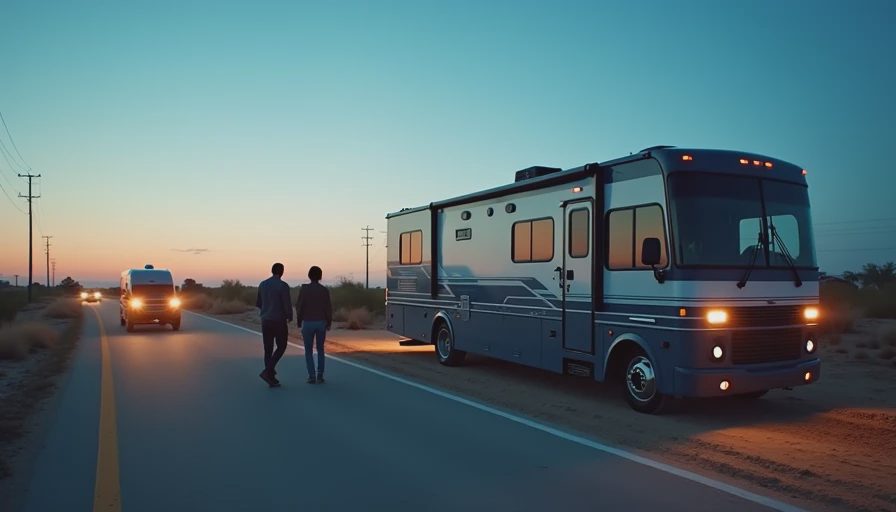
In my test harness, the ugly stuff rarely starts with a dramatic failure. It starts with a decent-looking lane keep that gets confused by faded paint, weird construction tapers, or a shadow cast by a box truck. On a long coach, the margin for error is thin because the turning radius, overhang, and stopping distance punish small mistakes. A severity 3 problem in a sedan can become a severity 5 problem in a forty-foot rig.
That is why I care about repeatability more than a demo route. If the autonomy stack does fine on a sunny highway loop but blows up in an RV park or a gas station entrance, the quote should reflect the real use case, not the press event. For a self driving rv, the claim history will eventually tell the truth anyway. Better to buy coverage that expects the ugly corner cases now than to argue about them later.
How to shop the market without wasting a week
Start with one mainstream carrier, one specialty RV carrier, and one independent agent who knows motorhomes. Compare liability limits, physical damage valuation, deductibles, storage rules, and any custom equipment cap. If one quote is much lower, find out whether the carrier quietly excluded the expensive parts. A policy that saves $300 a year but leaves a $20,000 sensor suite uninsured is not a bargain.
If you are serious about a self driving rv, make the carrier prove it understands the build. Send the photos, the receipts, the VIN, the software version, and the usage plan. Then compare the answers line by line. That is the same method I use on autonomy logs: same route, same weather, same scoring rubric, no hand waving. Your car talks. I check his homework. If the policy fits the machine instead of the brochure, you are in the right neighborhood.