As of this writing, tesla model q is a rumor label, not a clearly documented production vehicle with a published specification sheet. That distinction matters. Search results often turn a speculative name into a seemingly finished product, then repeat the same unverified range, price, and release date until the claims look authoritative. I do not treat repetition as evidence. I treat it as duplicated input.
The useful question is not whether an inexpensive Tesla sounds plausible. It does. Tesla has obvious reasons to pursue a smaller, cheaper vehicle: battery costs, factory utilization, regional competition, and a wider addressable market. The useful question is what has actually been confirmed, what is inference, and what would count as a real test result.
What tesla model q actually means
The name appears to function as shorthand for a rumored compact Tesla, often described by online reports as smaller and less expensive than the Model 3. Some versions of the rumor attach a target price near $25,000, while others suggest a compact crossover or a heavily simplified vehicle derived from existing Tesla hardware. Those are not the same product.
A badge, internal codename, and media nickname can all be different things. Tesla has used several development names over time, and outside observers frequently collapse platform speculation into a retail model. Until Tesla publishes a vehicle page, regulatory filing, investor disclosure, or an unambiguous production announcement, I would label tesla model q as unconfirmed.
That does not make the rumor worthless. It gives us a testable hypothesis. If a small Tesla is being developed, we should eventually see evidence in manufacturing changes, supplier activity, charging hardware, crash certification, software support, or controlled fleet sightings. One blurry photograph is weak evidence. A consistent set of independent signals is stronger.
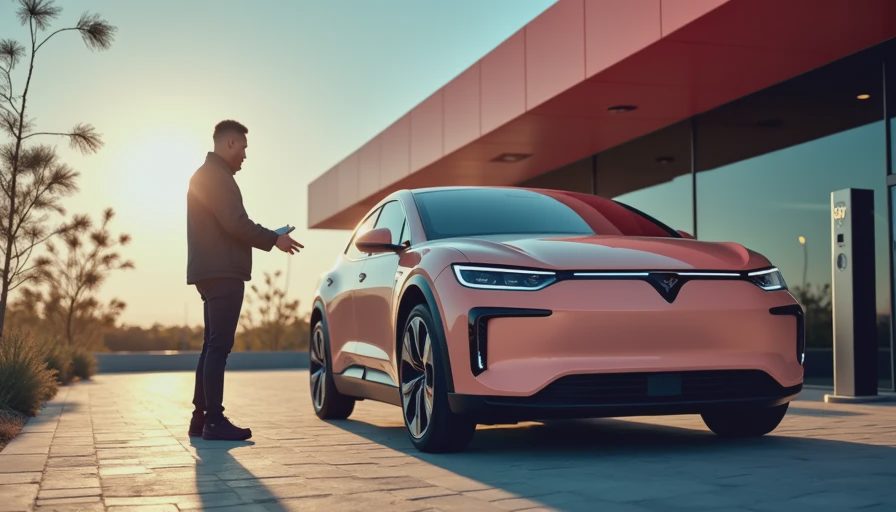
Tesla Model Q: separating evidence from internet momentum
My evidence scale is simple. A Tesla statement or regulatory document gets the highest confidence. A repeatable physical observation, such as the same camouflaged prototype appearing at multiple locations, gets a lower but useful score. A report from a named source can be informative, but it still needs corroboration. Anonymous posts, AI-generated renderings, and recycled screenshots sit at the bottom.
This matters because speculative car coverage often mixes three separate questions. Is Tesla building a smaller vehicle? Is it using the name tesla model q? Will it cost $25,000 before incentives? A reader can answer yes to the first question and still have no basis for the other two.
The price claim is especially fragile. A headline figure could exclude delivery charges, taxes, options, software subscriptions, or incentives. It could describe a future base trim that is not initially available. It could also refer to manufacturing cost rather than the customer's drive-away price. Anyone presenting one precise number without defining those variables is skipping the interesting part of the homework.
What I would measure on a real prototype
If a credible prototype became available, I would start with boring measurements. Exterior dimensions, curb weight, tire size, brake hardware, turning circle, seating position, rear visibility, and cargo access tell us more than a dramatic launch video. A compact car that weighs nearly as much as a Model 3 has not solved the efficiency problem; it has only changed the body shape.
Then I would test energy consumption over a fixed route at steady speeds, in stop-and-go traffic, and in cold weather. Michigan winters are useful here because low temperatures expose battery preconditioning behavior, cabin heating load, traction limits, and charging performance. I would run each route at least three times. If the results spread widely, I would publish the spread instead of selecting the best run.
Driver assistance needs its own test plan. I would check lane centering near faded markings, behavior around parked vehicles, unprotected left turns, cut-ins, construction barrels, and a stopped vehicle after a hill crest. Each failure gets a severity rating from 1 to 5. A delayed warning is not equivalent to a route-planning inconvenience, and neither should be buried in a single average score.
Tesla Model Q and the software question
A smaller vehicle would not automatically be a safer autonomous platform. It might share cameras, computers, and neural-network software with other Tesla products, but sensors and compute are only ingredients. Calibration, braking performance, tire contact, camera placement, and vehicle dynamics all affect the final behavior.
This is where tesla model q claims often get ahead of the evidence. People infer that a new car will inherit every capability advertised for an existing Tesla. That assumption needs a software build, hardware inventory, and repeatable drive logs. A lower-cost computer could impose different feature limits. A new camera location could alter perception. A shorter wheelbase could change how a planner handles a tight maneuver.
The correct comparison is not “Does it have the same AI?” The correct comparison is “Does it produce the same safe behavior under the same conditions?” I would replay matched routes across vehicles, record interventions, measure time-to-response where practical, and preserve the exact software version. Without version control, an OTA update can turn a comparison into a before-and-after experiment by accident.
What would make the tesla model q credible
Three developments would move this from rumor to engineering subject. First, Tesla would need to identify the vehicle clearly through an official product or investor channel. Second, independent evidence would need to show that physical cars exist beyond a staged display. Third, the company would need to reveal enough specification detail to evaluate the cost and capability claims.
A production schedule alone would not satisfy me. Manufacturers miss launch targets, change trims, and prioritize higher-margin versions when supply is constrained. I would want evidence of tooling, crash testing, charging compatibility, service documentation, and software support. Those details are difficult to fake consistently because they touch different parts of the organization.
For buyers, the practical test is even simpler. Do not place a refundable deposit based only on an unofficial rendering. Compare the current Model 3, used EVs, and competing compact vehicles using real monthly cost, insurance, charging access, warranty coverage, and winter range. A theoretical low sticker price is not a bargain if the available trim lacks features you need or arrives years later than expected.
The current scorecard
My present score for the tesla model q rumor is confidence 1 out of 5 for the name, 2 out of 5 for the general idea of a smaller Tesla, and 1 out of 5 for any exact price or launch date. Those scores are not a prediction of failure. They describe the evidence available to me now.
Here is what happened: the internet assembled a coherent story around a plausible product. Here is what it should have done: separate confirmed Tesla statements from anonymous reporting, renderings, and assumptions about manufacturing. Here is the gap: a believable narrative is still not a validated vehicle.
I will update the scorecard when the evidence changes, then rerun the same questions: What hardware exists? What does it consume? How does it behave at the edge cases? Does the claimed price survive contact with a real configuration? Until then, tesla model q is a useful hypothesis and a poor purchasing decision. Your car talks. I check his homework.