Timestamp: July 2026. Location: Ann Arbor, Michigan. Question on the workbench: is a used Tesla still a sensible machine after more than a decade? The 2014 model s is old enough that the badge tells you less than the service history, battery condition, and installed hardware. I would treat this car like an undocumented production system: inspect the inputs, reproduce the failure modes, and ignore the marketing copy.
This is not a nostalgia piece about silent acceleration. It is a buyer's checklist for an early Tesla Model S, including the parts that can turn a low purchase price into a $5,000 surprise. Your car talks. I check his homework.
What the 2014 model s actually gives you
The 2014 model s came in several configurations, including 60, 70, 85, and performance-oriented versions depending on build date and market. Battery size, drive motor, suspension equipment, wheels, and software features differ substantially. Do not assume two cars from the same calendar year are equivalent.
The 85-kWh cars are usually the most interesting used examples because they offered useful range when new and strong highway performance. Today, the important number is not the original EPA estimate. It is usable energy after years of charging cycles, temperature exposure, and calendar aging. A displayed range figure is evidence, not a complete battery test.
A VIN decode and original build sheet can answer basic questions: rear-wheel drive or dual motor, performance trim, panoramic roof, upgraded charger, heated seats, and driver-assistance hardware. A seller who cannot provide the VIN, title history, and recent service records is giving you a data-quality problem before the inspection even begins.
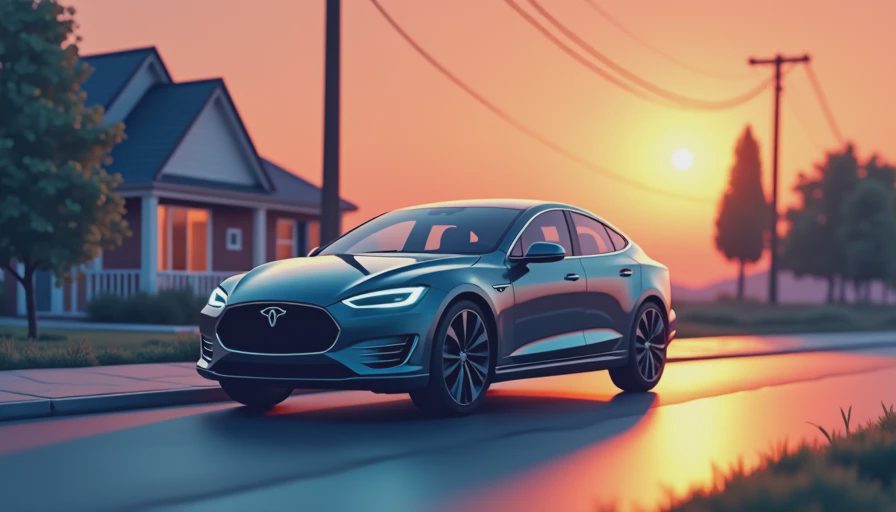
Battery, charging, and degradation checks
For a 2014 model s, battery health deserves more attention than cosmetic condition. A clean black exterior does not tell you whether the pack has lost meaningful capacity. Ask for a cold-soak range reading, then compare it with a similar battery configuration under similar conditions. Temperature, tire pressure, wheel choice, and driving speed can move the estimate enough to confuse a casual test.
During a drive, watch for abrupt power reduction, charging interruptions, unusual battery warnings, or a state-of-charge display that behaves inconsistently. Test both AC charging and, where supported and available, DC fast charging. A car that accepts energy normally at home but repeatedly fails at public chargers has a practical fault, regardless of how good the touchscreen looks.
Battery replacement pricing is not a single fixed number. A repair involving modules, contactors, cooling components, or pack replacement can range from a relatively manageable shop bill to many thousands of dollars. Get a written diagnostic from a Tesla specialist before treating any warning message as harmless. An independent EV shop can also identify charging and suspension issues without assuming every repair must happen at a Tesla service center.
Autopilot is a hardware question, not a promise
The 2014 model s may have early driver-assistance hardware, but equipment varies by build date and options. Some cars received the first-generation Autopilot sensor suite late in the production run; others did not. The presence of a software menu is not proof that a vehicle has the same capability as a newer Tesla.
I would verify the windshield camera area, forward radar location, ultrasonic sensors, steering-wheel controls, and the exact features shown in the car's software menu. Then I would separate three layers: hardware installed, software enabled, and behavior that is actually safe in the current environment. Those are different variables.
A 2014 model s with early assistance should be treated as supervised automation, not autonomous driving. Lane keeping can struggle with faded markings, construction zones, sharp curves, and low sun. Traffic-aware cruise control can react to cut-ins, stopped objects, or unusual road geometry in ways that require immediate human correction. Severity rating for a driver who treats the system as self-driving: 5 out of 5.
The old-car failure modes I would reproduce
Here is what happened in my inspection routine: the car looked excellent, the center display booted quickly, and the acceleration felt completely intact. Here is what it should have done: provide a clean record for every expensive subsystem. Here is the gap: cosmetic confidence often hides missing maintenance evidence.
Test the door handles repeatedly, inspect the air suspension if equipped, check the power liftgate, cycle the touchscreen, and confirm that climate controls respond without lag. Listen for suspension clunks over uneven pavement. Examine tire wear across the tread; uneven wear can point to alignment or suspension trouble rather than a simple need for new rubber.
Also test the 12-volt system and ask when it was last replaced. Early electric vehicles still depend on low-voltage electronics to wake computers, operate locks, and control vehicle systems. A weak auxiliary battery can create a confusing cluster of warnings that looks more dramatic than the underlying repair.
Ownership math: purchase price is only the first line
A cheap 2014 model s can be expensive in a very specific way: several medium-sized repairs can arrive together. Budget for tires, alignment, brake service, suspension work, a 12-volt battery, charging equipment, and insurance. Even if regenerative braking reduces friction-brake wear, age still affects calipers, bushings, seals, and electronic components.
Insurance deserves an early quote. Collision coverage pays for damage to your vehicle after a covered crash, subject to the deductible. Comprehensive coverage generally addresses non-collision losses such as theft, weather, animal impact, and glass, also subject to a deductible. Liability coverage protects against damage or injuries you cause to others, but it does not repair your Tesla.
Rates can be surprising because repairable aluminum body panels, sensors, glass, battery-related concerns, and labor availability affect claim costs. Get quotes using the exact VIN from at least three insurers, and compare a $500 deductible with a $1,000 or $1,500 option. A lower premium is not automatically better if the deductible would disrupt your budget after a crash.
My purchase gate for a 2014 model s
I would not buy a 2014 model s from a listing alone. First, decode the VIN and confirm title status. Second, obtain service invoices, battery and charging history, and software information. Third, schedule a pre-purchase inspection with an EV-qualified technician. Fourth, perform a real charging test rather than relying on a seller's screenshot. Fifth, price insurance before negotiating.
Walk away when the seller refuses an inspection, the title history is unclear, battery warnings are active, or the car cannot demonstrate normal charging. A low odometer reading does not cancel age-related risk. Conversely, a higher-mileage example with documented pack work, recent suspension service, healthy tires, and transparent ownership history can be the more rational purchase.
The 2014 model s is not automatically a bad car. It is an old, software-heavy vehicle whose expensive systems need evidence. Buy the records, the inspection, and the insurance quote first. The badge comes last.