At 7:42 a.m. on a damp Tuesday in Ann Arbor, I watched bluecruise center a Ford on a divided highway while the lane markings faded near a patched section of pavement. The system did not panic, but it did make a small, late correction that would have earned a severity-2 rating in my test harness. That is the useful way to evaluate bluecruise: not as a self-driving promise, but as a driver-assistance model with observable behavior, failure modes, and an attention requirement.
I treat every run like a software evaluation. I record road type, weather, traffic density, map status, lane quality, speed, driver interventions, and the system's response time. Then I compare the result against the same scenario in another vehicle or after an over-the-air update. Marketing language is not a test result. A clean drive is not proof that the edge case is solved.
What bluecruise is designed to do
bluecruise combines adaptive cruise control with lane-centering assistance on eligible roads and vehicle configurations. On supported divided highways, the vehicle can maintain a set speed, create following distance, and steer within the lane. Some mapped sections permit hands-free operation, but the driver still has to monitor the road and remain ready to take control. The cabin camera checks driver attention; it is not a substitute for that attention.
That distinction matters. bluecruise is not an autonomous taxi, and it does not turn a Ford or Lincoln into a vehicle that can handle every road independently. It generally performs best when lane boundaries are visible, the roadway geometry is predictable, and surrounding traffic behaves conventionally. Construction zones, unusual merges, poor weather, blocked cameras, and confusing temporary markings are where the interesting failures begin.
My baseline rating scale is simple. Severity 1 is a harmless cosmetic issue, such as a slightly awkward lane position. Severity 2 requires a correction but leaves a reasonable safety margin. Severity 3 is an uncomfortable or poorly timed maneuver. Severity 4 demands immediate driver intervention. Severity 5 represents a collision or near-collision condition. The scale keeps a smooth trip from hiding a serious weakness.
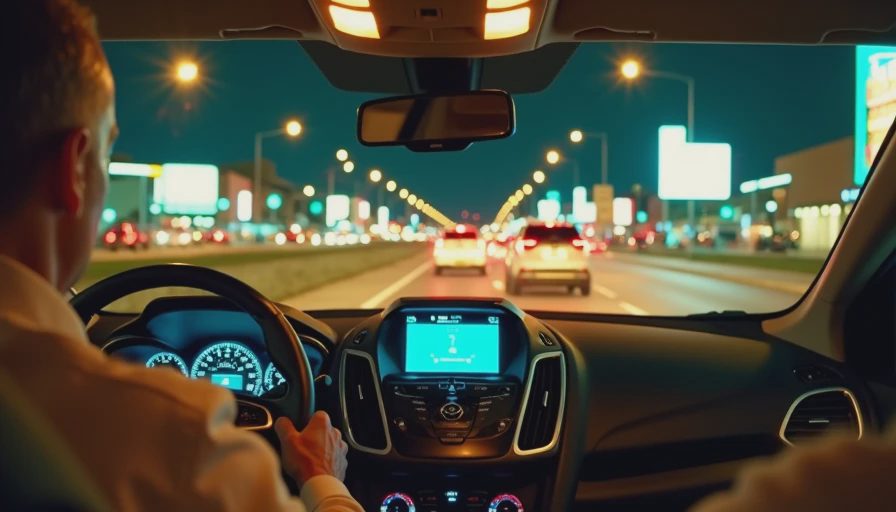
The first test is not hands-free driving
Before I evaluate hands-free behavior, I test whether bluecruise recognizes when its assumptions are no longer valid. I use a repeatable route with highway entrance ramps, lane splits, bridge shadows, patched asphalt, and moderate traffic. I run it in daylight and again near dusk, because perception quality often changes before a driver notices the difference.
The important observation is not whether the vehicle stays between two painted lines for ten miles. Most current systems can do that under friendly conditions. I want to know what happens when the right lane disappears, when a truck blocks the camera's view of a sign, or when a vehicle cuts across the planned path. Does the system slow early? Does it drift before announcing a limitation? Does it ask for help with enough time to matter?
In one representative scenario, a lane narrowed beside a concrete barrier. The correct behavior was a cautious reduction in speed and a stable path away from the barrier. The gap between that expectation and the actual trajectory is what I log. I do not call an ordinary lane adjustment a failure, but I do record timing, steering magnitude, and whether the handoff request was understandable.
Where the system feels competent
On a clean, divided highway with clear markings, bluecruise can reduce the repetitive workload of a long drive. The steering is usually less tiring than making constant manual corrections, and adaptive cruise control handles ordinary speed changes without the driver working the pedals. That is a real benefit for a commuter covering hundreds of highway miles each week.
The best runs have three characteristics: stable lane geometry, predictable traffic, and a driver who is already paying attention. When those conditions line up, bluecruise feels like a competent assistant rather than a confused robot. It keeps a centered trajectory, follows a lead vehicle smoothly, and avoids the twitchy corrections that make some lane-centering systems unpleasant.
But comfort can create its own risk. A quiet cabin, a steady steering wheel, and no obvious mistakes encourage attention to wander. The camera may detect that problem, but the driver remains responsible for the roadway. I treat a hands-free segment as reduced workload, not permission to read, text, or troubleshoot a laptop.
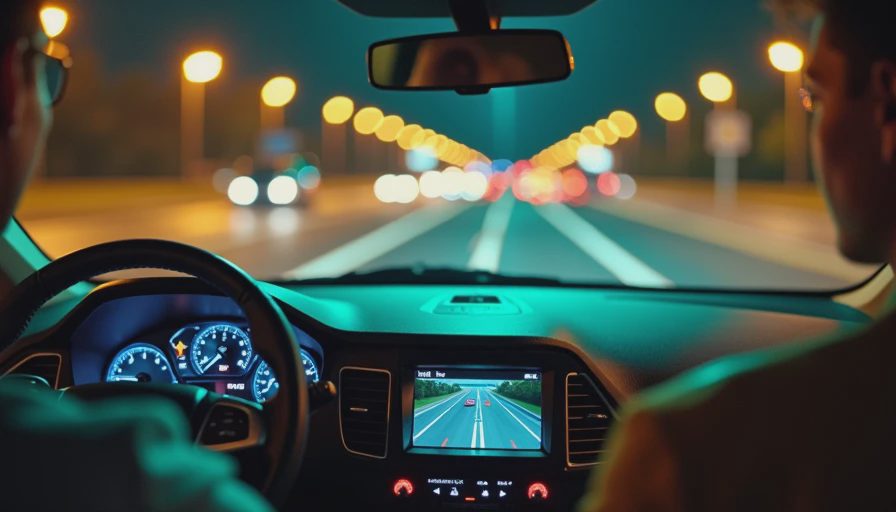
The edge cases that deserve a severity score
The most revealing bluecruise tests involve transitions. Entering a mapped highway segment is one transition; leaving it is another. A driver should understand whether the system is active, whether hands-free operation is available, and what warning appears when the road is no longer supported. Ambiguous feedback is a usability defect even when the steering remains stable.
Temporary construction is harder. Orange markings, shifted lanes, narrow shoulders, workers near the roadway, and concrete barriers can invalidate the visual pattern the model expects. A system that performs well on permanent pavement can still struggle when the road changes overnight. I rate a late warning more seriously than a conservative disengagement, because a clear handoff gives the driver time to build a safe response.
Weather deserves its own log. Rain can reduce contrast and create reflections; snow can obscure lane boundaries; low sun can wash out a camera view. I do not treat every disengagement as a failure. Sometimes refusing to operate is exactly the right decision. The question is whether the system communicates the limitation early and consistently.
OTA updates need before-and-after testing
An over-the-air update can change steering behavior, alert timing, map coverage, or the conditions under which hands-free mode activates. Release notes are useful, but they rarely describe every interaction among perception, planning, and driver monitoring. That is why I keep a fixed route and replay the same scenarios after each update.
For bluecruise, my comparison record includes the exact software version, vehicle trim, tire condition, weather, time of day, and whether traffic forced a lane change. I capture video from the cabin and forward-facing cameras, then mark every intervention. A single drive is not enough. I ran one transition three times and got three different handoff timings, which is more informative than claiming the system is simply good or bad.
Owners can perform a smaller version of this process. Choose a familiar highway, avoid distracting weather, and note when the system activates, how it handles following traffic, and how it behaves near exits or lane reductions. Do not deliberately create a dangerous test. If the vehicle requests control, take control immediately and log what happened afterward.
What I would change before trusting it farther
I would prioritize earlier, more specific handoff warnings. “Pay attention” is not the same as “construction lane shift ahead; steering assistance may end.” Drivers need enough context to understand whether they should stabilize speed, check a blind spot, or prepare for a manual lane change. I would also prefer a clear visual distinction between ordinary lane centering and hands-free availability.
Ford and Lincoln owners should also verify which roads and features their particular vehicle supports, because hardware, subscription status, software version, and map coverage can affect the experience. A vehicle that behaves well on one highway does not establish performance everywhere. Your route matters more than the badge on the hood.
My current conclusion is deliberately narrow: bluecruise is useful when treated as supervised assistance on suitable divided highways. It can reduce fatigue, but it cannot remove responsibility or eliminate the need for active observation. The compelling question is not whether the system looks impressive during an easy commute. It is whether the handoff is predictable when the road stops matching the training pattern.
Your car talks. I check his homework. For bluecruise, the homework is not finished; the scorecard is simply getting more detailed.