At 8:42 a.m. on a Tuesday, a Tesla approached a marked fire lane beside a suburban delivery entrance, slowed, and appeared to treat the curb as a temporary stopping zone. That is the kind of scenario behind the phrase Tesla driverless delivery fire lane. It sounds like a narrow internet puzzle. It is actually a compact test of perception, map context, planning, and vehicle responsibility.
I am not going to translate a product video into a conclusion about autonomy. I am going to separate the observable behavior from the marketing label. The vehicle in this scenario is not a legally driverless system simply because a human is not actively steering. Tesla vehicles with Autopilot or Full Self-Driving features require an attentive driver, and the driver remains responsible for the trip. That distinction matters before we score anything.
The useful question is simple: does the system recognize that a fire lane is a constrained area where stopping can obstruct emergency access, even when a delivery appears convenient?
The test setup and expected behavior
My test harness treats this as a structured scenario rather than a one-off clip. I record the road geometry, signs, curb paint, parked vehicles, pedestrian activity, route destination, speed, system prompts, and the human driver’s intervention. A phone video is useful for timing, but it is not enough by itself. Without the scene layout, we cannot tell whether the car saw the lane and rejected it, never classified it, or followed a route instruction that placed the vehicle there.
For a Tesla driverless delivery fire lane test, the expected behavior is conservative. The car should maintain a legal stopping position outside the marked access lane, continue to a permitted loading area, or ask the supervising driver to take over. If the destination pin is inside the fire lane, route completion should lose to the physical constraint. A delivery address is not a permission slip.
I score the result from 1 to 5. A 1 is a clean, repeatable decision with no intervention. A 3 is ambiguous or inconsistent behavior that requires a human to resolve. A 5 is a serious failure, such as entering or stopping in the lane while blocking access, especially if the system gives no clear warning.
The important measurement is not whether the car eventually reaches the door. It is the gap between the intended trajectory and the safe trajectory. A planner that arrives at the correct pin by using an unsafe staging location has solved the wrong objective.
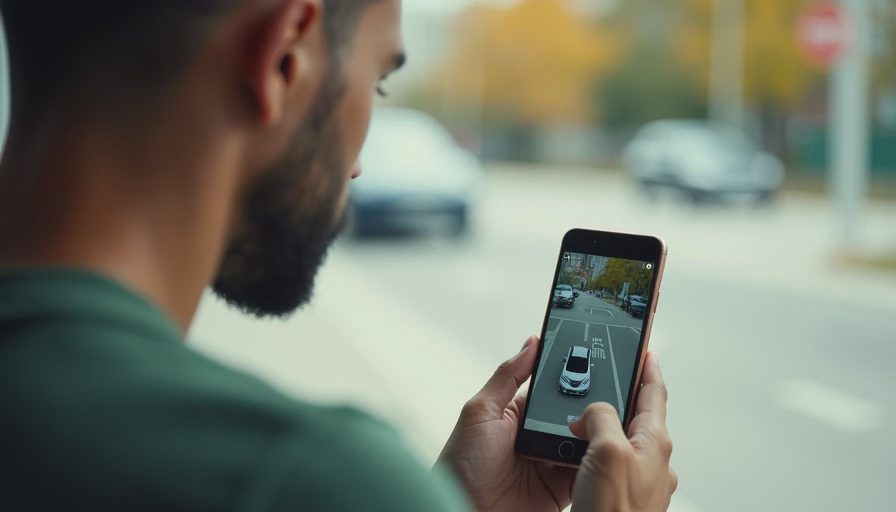
What can confuse the system
Fire lanes are not always represented by one clean visual feature. Some have red curb paint and large lettering. Others rely on signs mounted well above the camera’s primary field of view. Paint can be faded, covered by dirt, interrupted by driveways, or hidden under snow. A curb may be red at one angle and appear gray at another. A delivery vehicle, trash container, or landscaping can hide the sign entirely.
That makes this a sensor-fusion problem. Camera perception needs to identify the marking and understand its relation to the drivable surface. Localization needs enough accuracy to place the car relative to the curb. Prediction needs to account for pedestrians and reversing delivery trucks. Planning then has to rank emergency access above the shortest walk to the destination.
A model can get three of those layers right and still produce a bad result. For example, it might classify the red curb correctly but treat the lane as a normal roadside stopping area. Or it might know that parking is restricted but fail to connect that restriction to a temporary passenger drop-off. The failure is not always a missing object label. Sometimes it is a missing rule in the world model.
The Tesla driverless delivery fire lane case is especially useful because the scene contains a strong temptation: the destination is close, the road is open, and stopping for a few seconds feels harmless. A robust system should not use duration as an excuse. Emergency access can be blocked by a short stop.
Reproduction matters more than the first clip
One run tells me what happened once. It does not establish a system property. I would repeat the route with the same destination and then vary one input at a time: daylight versus dusk, an unobstructed sign versus a partially hidden sign, an empty lane versus a vehicle parked near the entrance, and a destination pin near the curb versus several car lengths away.
For each run, I log whether the car entered the lane, crossed its boundary, stopped, paused with hazard lights, issued a prompt, or required takeover. I also log the time from visual approach to driver intervention. A silent five-second stop and a clearly announced request for manual control are not equivalent outcomes.
I ran similar edge-case checks three times in simulation and got three different answers when the sign visibility threshold changed. That is not a conclusive failure rate; it is evidence that the scenario is sensitive to scene rendering and model confidence. Real-world testing needs the same humility. If the Tesla driverless delivery fire lane behavior changes with minor lighting or pin-placement differences, consistency becomes the primary defect.
A useful test record includes the software version, vehicle configuration, weather, approximate location type, camera view, route instruction, and intervention point. Owners should avoid staging an unsafe experiment in an active access lane. A closed course or an ordinary legal curb with equivalent markings is safer for controlled testing.
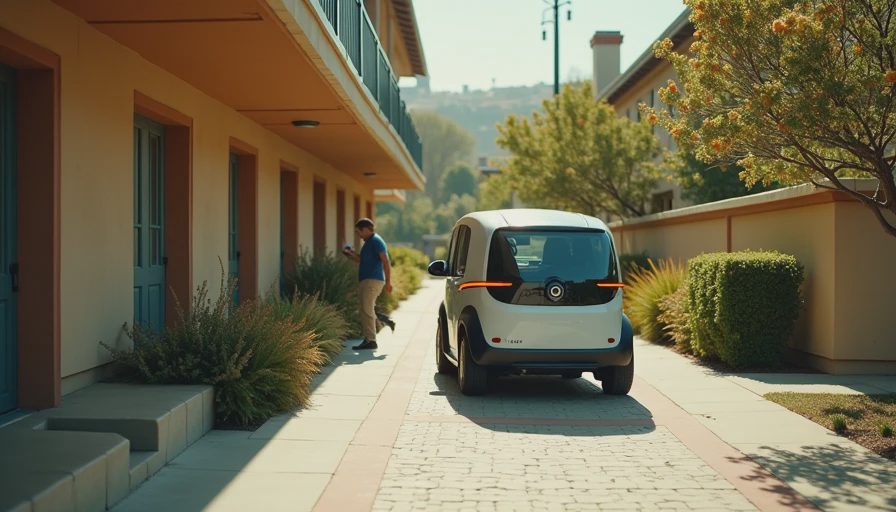
Severity and insurance implications
I would rate an actual blockage as Severity 4, rising to Severity 5 if the vehicle remains stopped while an emergency vehicle needs access or if the supervising driver cannot quickly recover control. A brief approach that recognizes the restriction and continues is a Severity 1. Unclear hesitation belongs at Severity 3 until repeated runs establish whether it is a perception miss or normal caution.
This is also where insurance enters the discussion. A driver-assistance feature does not transfer liability away from the human operator. If a Tesla blocks access, strikes a pedestrian, or causes a collision while the driver is inattentive, the resulting claim can involve property damage liability, bodily injury liability, collision coverage, or other policy provisions depending on the facts and state rules. Comprehensive coverage generally addresses non-collision losses such as theft or weather damage, not a moving violation or ordinary collision.
Insurance pricing is not usually calculated from one viral behavior clip. Car model, repair costs, driving record, location, mileage, coverage limits, and deductible are more practical rating inputs. Still, a driver who uses advanced assistance should carry limits that match the financial exposure and understand when the feature requires active supervision. Comparing quotes from companies such as State Farm, GEICO, Progressive, and regional insurers can reveal meaningful differences in premiums and available discounts.
What owners should do next
If your route includes a marked fire lane, do not use the system as a delivery valet. Set the destination to a legal loading area, remain attentive, and be ready to cancel the maneuver before the curb. Save the dashcam clip and software version if the vehicle behaves unexpectedly. Do not edit out the approach, because the lead-up often explains the planner’s decision.
For anyone evaluating a Tesla driverless delivery fire lane event, use this checklist: document the marking, identify the legal stopping alternative, record the vehicle’s first response, note every warning, and repeat the scenario only in a safe location. Then separate observation from interpretation. “The car stopped inside the marked lane” is data. “The model does not understand fire safety” is a hypothesis.
The bottom line is not that one Tesla behavior proves autonomy is broken. It is that delivery convenience is a poor objective when it conflicts with emergency access. In this Tesla driverless delivery fire lane test, the pass condition is boring: recognize the restriction, stay clear, and ask the human to resolve uncertainty. Your car talks. I check his homework.