At 7:42 a.m. in Ann Arbor, I watched a Model Y merge into a wet, half-faded lane while a Model 3 followed through the same gap. The cars are related, but they solve different problems. That is the useful starting point for tesla model 3 vs model y: not which badge wins, but which vehicle creates fewer compromises for your routes, passengers, cargo, and budget.
I am not treating a Tesla configuration page as a test result. Trim names, incentives, software, and estimated range change. My comparison uses repeatable questions: how does each car behave in traffic, how much usable space does it provide, what happens on a long drive, and what does ownership cost after the payment? Severity ratings below run from 1, minor annoyance, to 5, a problem that can change the purchase decision.
The physical difference is larger than the platform suggests
The Model 3 is a low sedan. That sounds obvious, but the seating position, roofline, and trunk opening shape every daily interaction. It feels closer to a conventional sport sedan: lower hip point, less wind exposure, and a smaller frontal area. The Model Y is a compact crossover with a taller roof, higher seating position, and a wide liftgate. Loading a stroller, boxed appliance, or dog is simply easier in the Y.
For a single driver or couple carrying laptops, groceries, and weekend luggage, the Model 3 usually supplies enough room. For a family using rear-facing child seats, the Model Y earns its extra footprint. Rear-seat access is less awkward, and vertical cargo space is more valuable than a brochure's total cubic-foot figure. My score: Model 3 for maneuverability, 2 out of 5 drawbacks; Model Y for utility, 1 out of 5 drawbacks.
The trade is efficiency. A lower sedan generally uses less energy at highway speed than a taller crossover with similar battery technology. That can mean fewer charging stops or a lower electricity bill over a year, although wheel choice, temperature, speed, and tire pressure matter more than many owners expect.
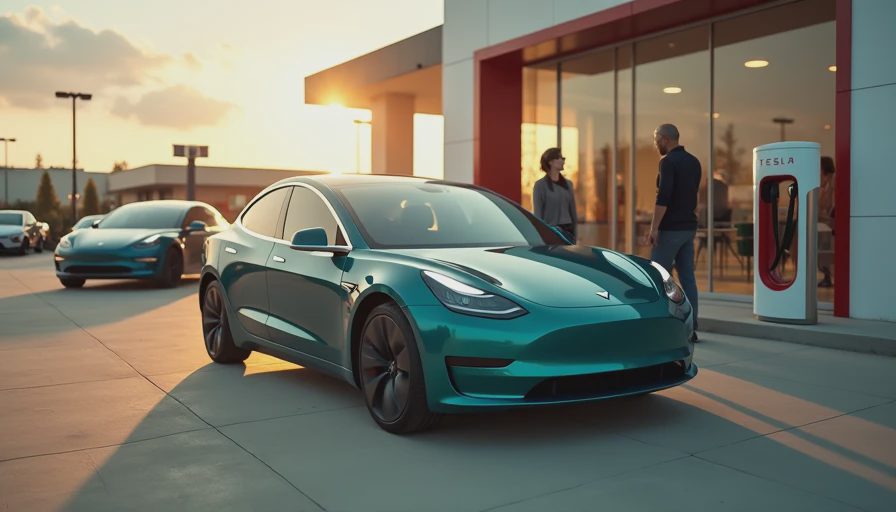
Tesla Model 3 vs Model Y on the road
In tesla model 3 vs model y testing, steering response is where the personalities separate fastest. The Model 3 typically feels more immediate and planted because the driver sits lower and the body moves less in corners. It is not a Miata, and mass remains obvious under hard braking, but the sedan communicates road position more clearly. I would rate it a 2 for ordinary driving and a 3 when pushed on a rough back road.
The Model Y gives up some of that neatness for visibility and access. Its taller body can feel more comfortable in city traffic, but it also produces more vertical motion over broken pavement. That is not a defect; it is the expected cost of crossover packaging. If your commute includes parking ramps, potholes, or frequent passengers, the Y's view and ingress may beat the sedan's cleaner response.
Do not confuse driver-assistance behavior with the hardware choice alone. A Model 3 and Model Y running similar software can make similar lane-selection or braking mistakes. Autopilot and other driver-assistance features remain supervision systems. The driver must monitor the road, keep hands available, and be ready to intervene. No trim turns an imperfect planner into an autonomous chauffeur.
Range, charging, and winter reality
Published range estimates are useful for comparing configurations, not for predicting your exact Tuesday. Cold weather reduces available energy, cabin heat consumes power, and sustained interstate speeds punish both cars. In Michigan winter, I plan around the next reliable fast charger rather than the optimistic percentage displayed at departure. That rule prevents a low-battery experiment from becoming a roadside experiment.
The Model 3 often has the efficiency advantage, especially in a long-range configuration with sensible wheels. The Model Y can still cover substantial distance, but its taller shape and additional mass increase the energy cost. At a home electricity rate of 15 cents per kilowatt-hour, a 300-mile week might cost roughly $8 to $15 in charging energy, depending on consumption and charging losses. Public fast charging can cost much more and varies by location and time.
For road trips, charging-network access matters more than a small difference in advertised range. Both vehicles benefit from route planning that includes battery buffer, weather, elevation, and charger availability. A ten-minute theoretical advantage disappears if the selected station has a queue or one broken dispenser.
Safety, repair exposure, and insurance
The tesla model 3 vs model y decision also belongs in an insurance spreadsheet. Both vehicles can have meaningful repair costs after a collision because sensors, cameras, glass, aluminum components, and specialized parts add complexity. The larger Model Y may cost more to insure in some situations, while the Model 3's lower purchase price can help in others. There is no universal winner based on model name alone.
Ask for real quotes before signing. Get the vehicle identification number for the exact configuration and request the same liability limits, collision deductible, comprehensive deductible, and uninsured-motorist coverage from at least three insurers. A $1,000 collision deductible can reduce premium compared with $500, but it also requires a larger emergency reserve after an at-fault crash.
Usage matters too. A commuter driving 15,000 miles annually has a different risk profile from a low-mileage household vehicle. Driver age, garaging ZIP code, claims history, credit-based insurance rules where permitted, and repair-market conditions can move premiums substantially. Progressive, GEICO, State Farm, and regional carriers can price the same Tesla differently, so a quote comparison is more reliable than a forum anecdote.
Cabin software is not the same as usability
Both cars share a software-heavy ownership model. Navigation, climate controls, charging status, camera views, and many vehicle settings live on the central screen. Over-the-air updates can improve functions, but updates can also rearrange controls or change behavior enough to require a new mental model. I treat every update as a new build: verify the version, record the route, and rerun the same edge cases.
The Model Y's cabin wins when the job involves loading and unloading. The liftgate is a practical interface, not decoration. The Model 3's trunk is adequate for ordinary luggage, but the opening can reject bulky items that would slide into the crossover. Conversely, the sedan's lower profile and smaller body can make tight garages and narrow urban parking spaces less stressful.
On the human-factors scorecard, the key question is not screen size. It is whether the person using the car can complete routine tasks without taking attention from driving. Precondition the cabin before leaving, set navigation while parked, and keep physical habits simple. A clever interface is still a bad interface if it demands repeated glances at 70 mph.
Which one should you buy?
Choose the Model 3 if you value efficiency, lower seating, sharper body control, and a sedan's smaller footprint. It is the more rational tool for a solo commuter or couple that rarely carries tall cargo. Budget for winter tires, a home charging installation if needed, and an insurance quote based on the exact trim rather than a generic online estimate.
Choose the Model Y if rear-seat access, cargo volume, visibility, and crossover practicality dominate your week. The extra height is useful every day for some families, not merely on vacation. Before buying, measure your garage opening, child-seat clearance, and the cargo you actually carry. A vehicle that fits the spreadsheet but fails the stroller test is not a bargain.
My conclusion from tesla model 3 vs model y is deliberately unglamorous: the Model 3 is the cleaner efficiency and driving choice, while the Model Y is the better utility instrument. Neither is automatically safer, cheaper, or more autonomous because of its body style. Run a real quote, test your normal cargo, drive both over your roughest road, and record what happened. Your car talks. I check his homework.