On July 29, 2026, in Ann Arbor, Michigan, I opened this investigation with one rule: do not convert a rumor into a specification. The tesla model s facelift 2026 is discussed online as if the hardware, release date, and autonomous-driving behavior are already known. They are not. I have not driven a production vehicle matching that label, and Tesla has not given me a testable engineering brief. So this is a scorecard for evidence, not a rewrite of a press release.
That distinction matters because a facelift can mean anything from revised bumpers and lighting to a new sensor suite, cabin electronics, suspension calibration, or a genuinely different vehicle architecture. Those changes produce very different ownership outcomes. A new headlamp is visible in a parking lot. Better perception at an unprotected left turn is a claim that requires controlled testing.
What “facelift” should mean here
In automotive terms, a facelift usually updates an existing platform rather than replacing the entire car. For a Model S, that could include front and rear styling, wheel designs, interior trim, seats, displays, cameras, processors, or thermal hardware. It does not automatically mean a new battery pack, a new drive unit, or a step-change in driver assistance.
The tesla model s facelift 2026 label is therefore too broad to answer with a simple yes or no. I would split the investigation into three layers. Layer one is observable hardware: body panels, lights, glass, cameras, connectors, and part numbers. Layer two is software behavior: lane positioning, braking smoothness, object classification, and route decisions. Layer three is serviceability: whether a replacement component is available, whether calibration is repeatable, and whether a repair requires a Tesla service center.
That separation prevents a common category error. A newer computer can run a newer model, but it cannot correct a camera mounted behind distorted or contaminated glass. A sharper display can improve usability without changing the car’s stopping distance. The benchmark has to measure the layer being discussed.
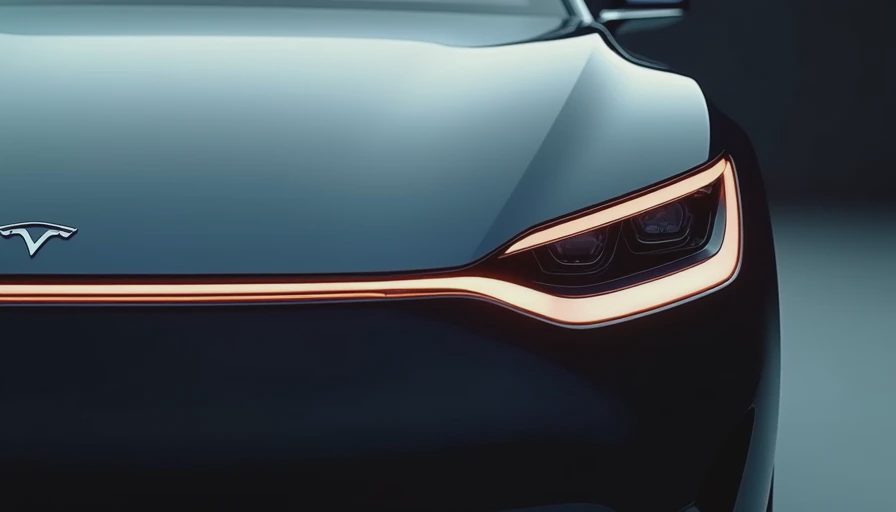
The evidence scorecard so far
My current scorecard for the tesla model s facelift 2026 has four grades: confirmed, observable, plausible, and unsupported. Confirmed means Tesla documentation, a physical vehicle, or an authenticated parts record exists. Observable means multiple independent images show the same feature, but its function is unknown. Plausible means the change fits product timing or supplier logic. Unsupported means the claim is currently a forum post, rendering, or anonymous tip.
Exterior redesign claims often sit between observable and plausible until a vehicle appears with consistent panel geometry. Range claims belong in the unsupported column without an EPA filing, measured road test, or repeatable charge curve. Performance figures require tire specification, battery state, ambient temperature, and launch procedure. Quoting a single acceleration number without those controls is brochure math.
The same standard applies to autonomy. “New AI hardware” is not a behavior result. I want repeatable runs with the same route, weather notes, traffic density, software build, and intervention definitions. My severity scale is simple: one is cosmetic, three affects comfort or confidence, and five creates a credible collision path. A glossy render earns no score.
What to test if a refreshed car appears
If the tesla model s facelift 2026 reaches customers, I will begin with a hardware inventory before driving. I will photograph camera locations, record software and firmware versions, inspect wheel and tire sizes, and compare the vehicle identification information with parts catalogs. I will also log calibration warnings after a windshield replacement scenario, because a system that works only before service is not robust engineering.
The road test needs repeatability. I would run a fixed route with lane merges, parked vehicles narrowing the lane, faded markings, a protected left turn, an unprotected left turn, and a stopped vehicle beyond the crest of a hill. Each scenario gets three runs where traffic permits. I will record intervention distance, braking onset, maximum lateral error, planner hesitation, and whether the car communicated its intent early enough for a human passenger to understand.
For example, if the car brakes for a shadow on run one, continues normally on run two, and brakes late on run three, that is not a clean pass or fail. It is variance. I ran similar perception tests three times in other production systems and got three different answers; the interesting result was not the average, but the unstable context around it.
Hardware changes that would actually matter
The tesla model s facelift 2026 would be more consequential if it changed the sensing and compute path rather than only the exterior. Camera placement, lens cleanliness, dynamic range, low-light performance, and processor latency can affect the planner’s available information. Still, a component upgrade does not prove safer behavior. The full stack has to use the data correctly.
For human driving, thermal management may matter more than a headline power figure. Repeated acceleration, fast charging, and hot-weather highway travel expose cooling limits. I would measure charge speed from a consistent battery state, note ambient temperature, and compare the first and third acceleration attempts. An impressive first run followed by severe power reduction is a different product from one that repeats the result.
Interior changes deserve the same skepticism. A revised screen, yoke, steering wheel, seat, or stalk arrangement changes workload only if the driver can operate it without looking away for too long. I would test turn-signal activation, wiper control, mirror adjustment, and manual takeover with gloves and in rain. A cleaner cabin is welcome; a control that hides a safety-critical action is a regression.
Should you wait or buy the current Model S?
This is where the tesla model s facelift 2026 search becomes a purchase decision rather than a rumor audit. If you need a car now, compare the current Model S with alternatives based on demonstrated range, charging access, insurance cost, repair logistics, and available driver-assistance features. Do not pay a premium for a future configuration that has no published price or delivery commitment.
Waiting makes more sense for a buyer who values design freshness, updated electronics, or resale timing and can tolerate an unknown launch schedule. The risk is familiar: early builds can have software defects, panel-fit variation, parts delays, and inconsistent calibration. A current vehicle has a larger owner population and more accumulated troubleshooting information. That information has practical value when a warning appears on a snowy Tuesday morning.
My own buying threshold would require three things: a documented hardware change, independent instrumented testing, and evidence that service procedures are available. A marketing image satisfies none of them. If Tesla publishes a build guide or a real vehicle appears in the field, the scorecard changes. Until then, the rational move is to preserve cash and keep the rumor separate from the product.
Final assessment
The tesla model s facelift 2026 is a useful search term, but currently a poor substitute for evidence. Exterior sightings can establish that a prototype or updated car exists; they cannot establish range, reliability, autonomy, or safety. Software promises need version numbers and reproducible routes. Performance promises need temperatures, tires, battery state, and repeated runs.
Here is what happened: the internet assembled a plausible future Model S from fragments. Here is what it should have done: label each fragment by confidence and testability. Here is the gap: most discussion skips directly from appearance to conclusion. I will update this page when there is hardware I can photograph, software I can identify, and behavior I can reproduce. Your car talks. I check his homework.