At 7:42 a.m. on a wet Tuesday in Ann Arbor, I asked Tesla self drive to handle a familiar route: residential streets, an unprotected left turn, a school-zone crossing, and one badly faded lane line. The car completed the drive. That sentence is not a safety verdict. It is only the first line in a test log.
Tesla calls its current system Full Self-Driving (Supervised), and that parenthetical is the important part. This is an advanced driver-assistance system, not a license to read email from the back seat. The driver must remain attentive, monitor the road, and be ready to intervene. My question is narrower and more useful: does the system choose a reasonable trajectory, communicate its intent, and recover cleanly when the scene stops matching its training patterns?
What Tesla Self Drive Means in Practice
Tesla self drive combines automated steering, speed control, lane changes, turns, and route following. Depending on the vehicle, software version, region, and hardware configuration, the experience can include city-street navigation rather than only highway lane keeping. The exact feature set is controlled by software and Tesla account eligibility, so two visually similar cars can behave differently after an update.
The system still has a human-in-the-loop requirement. It can make an incorrect turn, brake unexpectedly, hesitate at a green light, or misread a temporary traffic arrangement. A steering-wheel reminder or driver-monitoring camera is not a substitute for active supervision. Tesla's name does not change the physics of a blocked camera, a dirty windshield, glare, snow, or an object the model classifies incorrectly.
I score each event from one to five. A severity-one event is cosmetic, such as a slightly awkward lane position with no conflict. Severity-three means a driver intervention or a clearly unreasonable maneuver. Severity-five means an imminent collision risk or a failure that demands immediate takeover. That scale is more informative than saying a drive felt smooth.
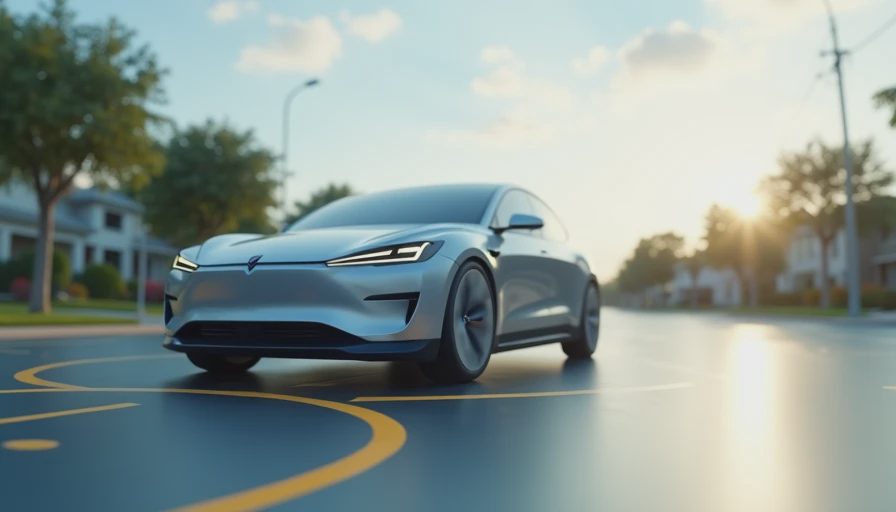
The Test Harness I Use
A useful Tesla self drive test needs repeatability. I keep the route, start time, weather, traffic conditions, software version, and vehicle configuration in the log. I do not compare a sunny Sunday run on empty roads with a rainy rush-hour commute and call the difference a software improvement.
The core route includes five segments: a narrow residential road, a multilane arterial, an unprotected left turn, a construction zone, and a parking-lot exit with pedestrians nearby. Each segment is run at least three times when conditions allow. For every intervention, I record what the car saw, what it appeared to plan, what the driver did, and whether the same failure reproduced.
That last part matters. A single strange brake event can come from a shadow, a truck crossing the camera view, or a real planning defect. Three runs that produce three different answers are not clean data, but they are still evidence. I label them inconclusive rather than quietly selecting the run that supports my preferred conclusion.
My scorecard tracks intervention count, minimum following distance, unnecessary braking, lane-change completion, route adherence, and recovery after a missed opportunity. I also save dashcam clips and the displayed visualization. The visualization is useful context, not ground truth. A confident screen animation does not prove that the underlying perception was correct.
Where the System Commonly Gets Stuck
Tesla self drive is strongest when road geometry is legible and the next action is conventional. It generally has more context than basic adaptive cruise control, which can make a long drive less tiring. The difficult cases are not always dramatic. They are ambiguous scenes where a cautious human uses social cues, eye contact, and local knowledge.
Watch for late lane changes near a freeway split, hesitation when a parked vehicle narrows the lane, and overly cautious behavior around a pedestrian who is clearly waiting on the sidewalk. Temporary signs can also expose planning weaknesses. A cone pattern may require crossing a faded line, while the model continues treating that line as a hard boundary.
Unprotected left turns deserve their own test. The vehicle must estimate gaps, account for oncoming speed, and decide whether its intended path remains clear. A pause is not automatically a failure. A pause followed by a sudden acceleration, an aborted turn, or a driver intervention is a more meaningful finding. The right question is not whether the car looked human. It is whether the trajectory was safe, legal, and predictable.
What Changed After an OTA Update?
An over-the-air update can alter Tesla self drive behavior without changing the vehicle hardware. Do not rely on release-note language alone. “Improved driving behavior” is too broad to evaluate. Instead, rerun the same route and compare the raw event log.
For example, measure whether the car completed the same left turn without intervention, not whether the drive felt more natural. Record whether a previous severity-three event became a severity-one hesitation or simply moved to a different location. Check braking distance, lane centering, and the timing of turn signals. A system that avoids one failure by becoming excessively conservative has traded one metric for another.
Version comparisons also need a control. If traffic, lighting, or weather changed, note it. If you changed the route because the old construction zone disappeared, do not present the result as a direct A/B test. Engineers already know this principle from model evaluation: changing the dataset while changing the model makes the conclusion weaker.
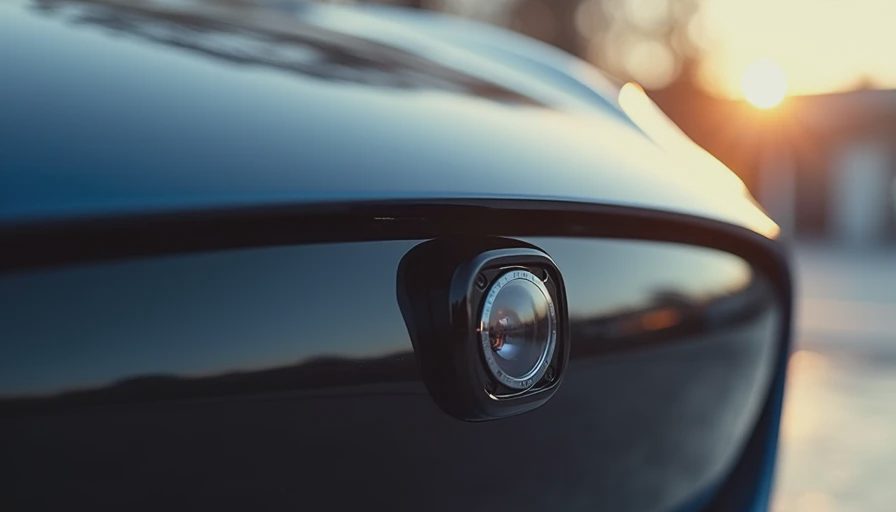
Tesla Self Drive Versus the Marketing Label
The phrase Tesla self drive suggests a capability that the supervised product does not provide. Tesla's branding is not a technical definition, and a driver should not infer autonomy from the name on a menu screen. The practical distinction is control responsibility. With supervised assistance, the human remains responsible for monitoring and intervention.
That distinction affects ownership decisions, too. A buyer comparing a Tesla with a Ford BlueCruise or General Motors Super Cruise vehicle should compare the specific roads, monitoring requirements, mapped-road limitations, lane-change behavior, and subscription or purchase terms. Highway assistance that performs predictably on divided roads can be preferable to a broader system that is harder to supervise in dense urban traffic. More features do not automatically mean fewer interventions.
Insurance is another reason to avoid casual language. Advanced driver assistance does not eliminate liability coverage, collision coverage, or the driver's responsibility after a crash. Premiums depend on the vehicle, location, driving history, coverage choices, and insurer underwriting. A safety feature can be valuable without making the car autonomous or guaranteeing a lower premium.
A Practical Owner Checklist
Before trusting any Tesla self drive release on a regular commute, confirm the software version and read the feature notes. Clean the cameras and windshield. Choose a route with a known baseline, then drive it manually once so you understand the lane markings, sight lines, and construction changes.
During the assisted run, keep both attention and an intervention plan active. Do not test while distracted, do not use a phone, and do not deliberately create a dangerous edge case for video content. Mark every takeover immediately, including the reason: late braking, incorrect lane choice, blocked path, hesitation, or unpredictable behavior around another road user.
Afterward, review the footage instead of trusting memory. Ask three questions: What happened? What should the car have done? What was the gap? If the answer is unclear, repeat the scenario under similar conditions. A clean run is encouraging. A reproducible failure is more valuable because it tells you exactly where supervision needs to be strongest.
Your car talks. I check his homework. The sensible conclusion about Tesla self drive is not that it works or does not work. It is that the system has useful competence, known failure modes, and software behavior that must be measured after every meaningful update. Treat it like a model under evaluation, not a chauffeur with a marketing name.