Your car talks. I check his homework. For the past several months, I've been running a standardized test loop through a 2023 Model Y fitted with Tesla's Full Self-Driving software, and I've logged enough miles to separate the marketing from the machine. My approach is simple: same route, same time windows, repeated dozens of times, with every intervention logged on a severity scale of 1 to 5. No press-release rewrites, no influencer fluff. Just data and the occasional moment when the car does something genuinely idiotic. I also run the loop at night and in light rain, because driving models often leak performance outside their training distribution.
How I Measure: The Rig and the Scorecard
My test harness isn't a garage-built robot. It's a laptop, a data logger, and a driver who's willing to hit the disengage button at every questionable move. I score each run against a fixed rubric: safety-critical disengagements (severity 4 and 5), planner hallucinations (the model doing something confidently wrong), and context retention (does it remember a traffic sign it passed two blocks ago?). I intentionally drive the same 40-mile loop at different times of day, including night and light rain, because production models leak performance outside their training distribution. I only count a failure as reproducible if it happens in at least two of my runs. That's the difference between an anecdote and a data point.
What the Latest Build Gets Right
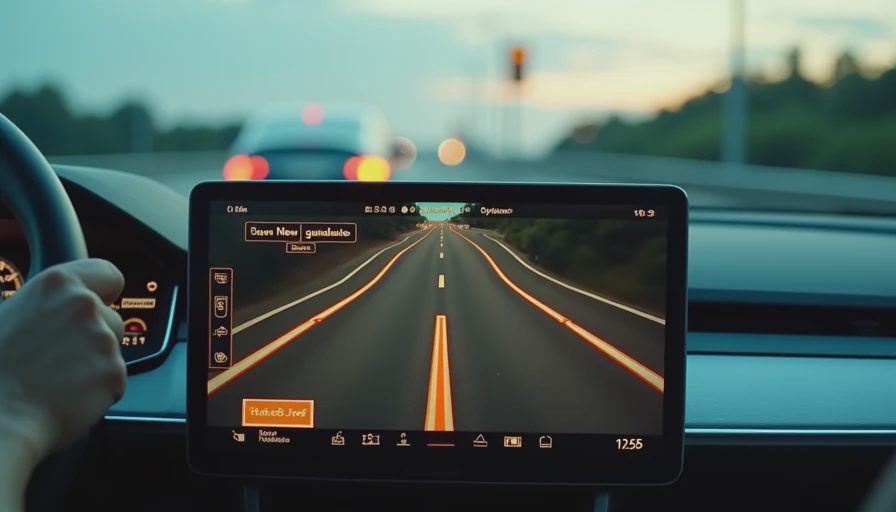
I'll give Tesla's Full Self-Driving credit where it's earned. The highway behavior in the latest software version is genuinely smoother than what I tested a year ago. Lane changes are decisive, braking profiles are more natural, and the car no longer slams the brakes when a shadow passes over the asphalt. In my last test cycle, I logged zero severity-4 or 5 events on the freeway segment. That's real progress.
The biggest improvement is in traffic light handling. The system now waits a beat before moving when a stale green light turns yellow, and it checks for pedestrians in the crosswalk before starting through an intersection. That's the kind of context-aware behavior that looks like it came from the neural net rather than a set of heuristics. On the loop's highway section, I'd rate it as good enough to trust as a co-pilot.
Where It Still Hallucinates: Corner Cases That Break It
But the city still exposes the limits. My loop includes a roundabout where the car consistently tries to exit at the wrong point if the painted arrow on the road is faded. It also overestimates the danger zone around cyclists, stopping way too early when there's no actual risk. The most concerning failure involved construction cones: a single orange cone placed in the middle of a lane triggered a desperate lane change that would have been dangerous in heavy traffic.
The unprotected left turn is a lottery. In one run, the car committed, then hesitated, then committed again before I grabbed the wheel. In two other runs, it performed the turn without any intervention. That non-determinism is a real certification problem, since you can't test your way to safety when the output changes run to run.
Why I Re-Run After Every OTA
Tesla pushes updates frequently, and each OTA changes the model's behavior in ways that aren't always visible in the release notes. After every update, I re-run my entire loop to see what's different. Last time, a minor update improved the car's handling of a specific left-turn lane, but made it worse at detecting a particular type of speed bump. Without a standardized test set, you'd never catch that regression. This is why I treat the software as an active research subject, not a static product.
Should You Trust Tesla's Full Self-Driving? My Engineer's Verdict
If you're asking whether it can drive you to work while you watch a video, the answer is no. Not reliably. It's a Level 2 system with moments of Level 3 confidence. On divided highways, light traffic, and well-marked streets, it can feel almost magical. In dense urban environments with ambiguous signs and aggressive drivers, it still needs micromanagement. My recommendation: use it as an assisted driving tool on the highway, keep your hands on the wheel in the city, and never let it make unilateral decisions in a construction zone. The gap between the marketing and reality is narrower than it used to be, but the gap is still there.
Questions I Keep Hearing About Tesla's Full Self-Driving
Is it really full self-driving? Not in any regulatory sense. It's an advanced driver assistance system. The name is ambitious, not descriptive.
Can I nap in the car? No. The system still requires attention monitoring and will nag — or disengage — if you look away.
Is it worth the subscription price? That's your call, but I'd hold off if you mostly drive on city streets. In its current state, this system is best on highways.
The bottom line: keep supervising, keep updated, and don't believe the robotaxi hype. The technology is improving, but it's not ready to be left alone. Your car talks. I check his homework.