The 2013 tesla model s is old enough to demand a test plan, not a nostalgic sales pitch. It was a landmark electric sedan, but a decade of battery cycles, software changes, weather exposure, and repair history matters more than the original brochure. I would evaluate one like a production system: define the inputs, reproduce the behavior, record the failure modes, and price the risk. Your car talks. I check his homework.
What the 2013 Model S actually gives you
The 2013 tesla model s arrived in several battery configurations, including versions commonly identified by their approximate usable capacity. Exact range depends on battery health, wheels, temperature, speed, and software. Do not treat an advertised range number as a current measurement. A car that once traveled roughly 200 miles on a charge can deliver materially less after years of use, particularly in winter.
The driving hardware also varies by build date and trim. Early cars do not automatically have the sensor suite or computing hardware associated with later Tesla driver-assistance features. A listing that says “Autopilot” deserves verification inside the vehicle menus and through the car’s build information. Driver assistance is not autonomous driving, and no 2013 car should be purchased on the assumption that a future update will add modern capability.
The cabin and powertrain remain appealing. Instant torque, a low center of gravity, a large hatch, and over-the-air software updates give the sedan a different ownership profile from a similar-age BMW 5 Series or Mercedes-Benz E-Class. The weak point is not that every old Tesla fails. It is that a single expensive subsystem can dominate the economics of an otherwise inexpensive used car.

Battery, charging, and degradation checks
Start with a full charge and record the displayed rated range, not just the percentage. Repeat the reading after the car has rested and compare it with the configuration’s original estimate. This is not a laboratory battery-capacity test, because the display uses an estimate and can change after calibration. It is still useful evidence when combined with charging behavior and road testing.
On a test drive, watch for abrupt power reduction, unusual battery warnings, inconsistent state-of-charge changes, or a charge rate that falls far faster than expected. Test both AC charging and, where practical, a compatible DC fast-charging session. Early Supercharging access and charging performance can differ by vehicle configuration, adapters, account status, and station condition, so verify the exact car rather than trusting a generic listing.
Ask for service records covering the high-voltage battery, drive units, onboard charger, charge port, cooling system, and 12-volt battery. A replacement pack can cost several thousand dollars or considerably more depending on parts, labor, availability, and whether a remanufactured unit is used. That does not make every battery problem catastrophic, but it makes a pre-purchase inspection cheap insurance.
The mechanical inspection most listings skip
A quiet electric powertrain does not mean a quiet chassis. Put the car on a lift and inspect suspension links, bushings, ball joints, half-shafts, wheel bearings, tires, brake lines, and underbody damage. Listen for clicking during full-lock acceleration and clunks over uneven pavement. Heavy EVs can consume tires and suspension components faster than a casual test drive reveals.
Check the windshield, panoramic roof if equipped, door handles, power liftgate, screens, cameras, climate controls, and seat hardware one function at a time. Screen replacement and body electronics can be expensive, while a misaligned door or water intrusion can create secondary faults. Confirm that every key, charging cable, adapter, and removable trim piece promised by the seller is present.
For insurance, obtain a quote using the vehicle identification number before paying a deposit. Collision and comprehensive coverage can be costly because Tesla-specific parts, aluminum body repairs, calibration, and limited repair-shop availability affect claim expenses. Liability coverage pays for damage or injuries you cause to others; collision generally covers crash damage to your vehicle after the deductible; comprehensive addresses non-collision losses such as theft, weather, glass, or animal damage.
A repeatable road-test scorecard
I use five severity levels. Level 1 is cosmetic or inconvenient. Level 2 is a minor functional defect. Level 3 affects reliability or safety margins and needs a repair budget. Level 4 can strand the driver or create a major financial exposure. Level 5 is an immediate safety stop.
For the 2013 tesla model s, run the same route in city traffic, on a highway, and over rough pavement. Record battery percentage at the start and finish, outside temperature, tire pressure, warning messages, cabin heat, regenerative braking, and charging behavior. Test the brakes with normal pedal pressure, then verify that regenerative braking transitions smoothly when the battery is cold or nearly full.
If driver assistance is installed, test only on a controlled, legal route with full attention on the road. Score lane centering, following distance, braking near stopped vehicles, and behavior around faded markings separately. A system that performs well on a sunny divided highway has not passed an urban validation suite. It has passed one narrow test case.
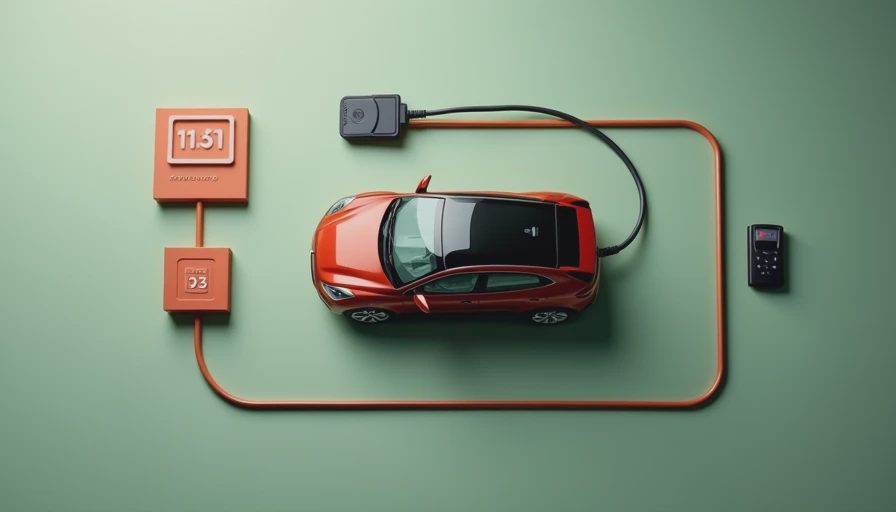
Insurance and ownership math
Build two budgets: routine ownership and failure exposure. Routine costs include tires, alignment, brake service, cabin filters, charging, registration, and insurance. Failure exposure includes a drive unit, battery-related repair, charge hardware, screen, suspension component, or collision repair. A low purchase price does not eliminate those costs; it can simply move them closer to the date of purchase.
Get at least three insurance quotes with identical limits and deductibles. Compare a $500 collision deductible with a $1,000 deductible, then calculate whether the premium difference justifies taking on another $500 of loss. Ask whether the carrier requires an approved repair facility and how it handles original, aftermarket, or recycled parts. Rates are driven by location, driving record, coverage limits, mileage, credit-based insurance factors where permitted, and the specific vehicle—not just its age.
A usage-based program could reduce premiums for some drivers, but review its privacy terms and scoring rules before enrolling. If the vehicle is financed, the lender will typically require comprehensive and collision coverage. A paid-off car gives you more flexibility, but dropping physical-damage coverage on an older EV can leave a large replacement bill after a total loss.
Buy decision: evidence over badge value
The strongest 2013 tesla model s candidate has a clean title, complete records, healthy charging behavior, consistent range evidence, even tire wear, and an insurance quote that fits the budget. A seller who permits an independent inspection is giving you useful information. A seller who insists that software updates solve every concern is giving you a different kind of information.
Walk away from warning lights, unexplained battery restrictions, severe suspension noise, water damage, missing ownership paperwork, or a price that leaves no repair reserve. If the car passes the inspection, keep a dedicated reserve of several thousand dollars rather than spending every available dollar on the purchase. That reserve is not pessimism; it is the same risk buffer I would allocate to any aging, software-heavy platform.
The 2013 tesla model s can still be a compelling used EV when its battery, charging system, chassis, and insurance costs are measured instead of assumed. Run the checklist, save the diagnostic screenshots, and request quotes before you sign. The data will not remove uncertainty, but it will tell you whether the uncertainty is affordable.