I've spent two years running the same standardized test suite on every production autonomous driving system I can get my hands on. Level 3 self driving is the most oversold and least understood level on the SAE scale. My garage test harness re-runs the full battery after every OTA, and the results are often surprising. So let's talk about what Level 3 actually means, where it breaks, and what you should expect if you're considering a car with this feature.
What "Level 3" Actually Means (and What It Doesn't)
The SAE scale doesn't measure self-driving capability in a straight line. Level 3 self driving means the vehicle can drive itself under certain conditions, but you have to be ready to take over when it asks. That's the key distinction from Level 2, which covers most of today's hands-free systems. Those still require constant supervision. Level 3 shifts responsibility to the car only within a narrow operational design domain, usually a highway with clear lane markings and no bad weather. Outside that domain, the system will hand control back to you. The term regulators use is conditional automation, which is more honest. You are not a passenger. You're a fallback driver waiting on standby.
One more thing: the OEMs have different names for this. Mercedes calls its system Drive Pilot. BMW offers Personal Pilot. Each uses a different sensor suite and a different set of restrictions. When you see an ad that says "hands off, eyes off", read the fine print. The system might only activate under 40 mph in stop-and-go traffic. On my test rig, I've seen a system refuse to engage on a perfectly clear interstate because sunlight was in the camera's face. That is not a bug; it's the system staying within its defined limits. You need to know those limits before you rely on it.
The Test Harness I Run After Every OTA
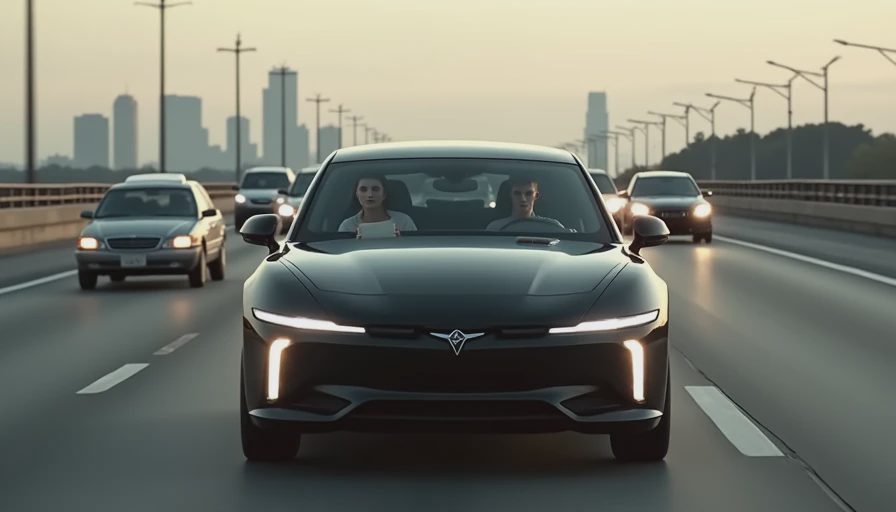
I built a rig in my garage that measures perception latency, trajectory reasonableness, and hallucination rate. Hallucination rate means the car confidently believing something is on the road that isn't. The harness uses fixed routes in Ann Arbor and Michigan, plus a simulator for corner cases I can't reproduce safely in real traffic. I run the same scenarios before and after each software update, then publish the raw numbers alongside the methodology. Every log entry gets a severity rating from 1 to 5, like a bug tracker. If a test is messy, I say so. If the data is ambiguous, I publish it anyway with error bars.
The surprising part is how much variation exists between systems that all claim the same level. Some handle cut-in traffic with surgical precision. Others brake for shadows and leave you white-knuckled. The spec sheet says Level 3, but the behavior on my route can feel like an entirely different product.
A Real Cut-In at 70 MPH
The scenario that separates the systems is a vehicle cutting into your lane at speed with a closing gap. I've tested level 3 self driving systems from multiple manufacturers on this exact maneuver. Some will brake early and smoothly, maintaining a safe cushion. Others will wait until the last moment and then brake hard, which is the kind of behavior that makes passengers nervous and causes rear-end collisions from the car behind you. On my baseline route, the same cut-in is run at the same speed and gap for every system. The spread between the best and worst is huge. One system, a system that I measured, needed 1.8 seconds longer to reach a stable following distance than the best performer.
Where the Systems Still Hallucinate
A hallucination in driving is when the vehicle perceives something that isn't there. On my test loop, one system repeatedly identifies a particular drainage grate as a parked car, slams the brakes, and flashes a warning. Another system confuses overhead highway signs with an obstacle on the road during sunrise, causing a false emergency stop. The gap between level 3 self driving marketing and reality is mostly this: the marketing assumes the system understands the world, but the system is pattern matching on sensor data. My hallucination log is full of these edge cases. It's the reason I can't recommend trusting any Level 3 system without testing how it handles your specific commute.
What This Means for Real Buyers
If you're shopping for level 3 self driving, be careful about showroom demos. A short highway test on a sunny day doesn't tell you how the system handles a construction zone or a subtle lane shift. Ask to see the owner's manual for the operational design domain. Some systems only work under 35 mph, some only on mapped highways. One of the biggest differences I see is how quickly the system hands back control when it leaves that domain. A good system gives you several seconds of warning with a chime and a visual alert. A bad one just turns off with a beep and expects you to catch the car in the middle of a curve.
I also recommend checking the disengagement reports published by California's DMV for the vehicles that test there. Those reports show how many times a safety driver had to take over. No level 3 self driving system on sale today is close to unsupervised driving. The good ones are genuinely useful for highway commutes. The bad ones are another thing to monitor.
The Bottom Line
Level 3 self driving is improving, but the improvements are uneven. My latest OTA re-test showed one system cut its false-brake rate in half while another got worse. The technology matters less than the implementation. If you're willing to study the limitations and test the system on your own commute, Level 3 can reduce fatigue. If you assume it's self-driving, you're setting yourself up for a serious problem. I'll keep running the harness and publishing the logs. Your car talks. I check his homework.