At 7:10 a.m. in Ann Arbor, Michigan, a Tesla changes lanes beside a construction barrel, hesitates for half a second, then continues. That is not a tesla robotaxi. It is a production vehicle running an advanced driver-assistance system with a human responsible for every decision. The distinction sounds semantic until something goes wrong. Then it becomes the entire safety case.
I evaluate autonomy the way I evaluate an inference model: define the task, record the inputs, log the output, and preserve the failure. Marketing language is not a test result. A tesla robotaxi would need to demonstrate reliable operation without an attentive human driver, across a defined service area and under defined weather, road, and traffic conditions. Until that evidence is public and repeatable, the correct posture is interested skepticism.
What a tesla robotaxi would have to prove
A real tesla robotaxi service is more than a Tesla with Full Self-Driving activated. The vehicle would need to complete trips without a safety driver continuously monitoring the road. It would also need remote assistance procedures, a way to handle a blocked lane or collision, passenger protections, maintenance controls, and a regulator-approved operating framework.
That creates several separate engineering problems. Perception must identify pedestrians, motorcycles, emergency vehicles, temporary signs, and debris. Prediction must estimate what those road users will do next. Planning must select a trajectory that is legal, comfortable, and conservative when the scene is ambiguous. Controls must execute that plan without excessive braking, steering oscillation, or late corrections. A polished demo can hide failures in any one of those layers.
The useful question is not whether the car drove ten miles without intervention. Ask how many miles were tested, how many interventions occurred, what counted as an intervention, and whether the route was selected in advance. A vehicle that performs well on familiar arterial roads in clear daylight has not automatically solved unprotected left turns, snow-covered lane markings, school pickup traffic, or a police officer directing vehicles around an incident.
FSD supervision is not driverless service
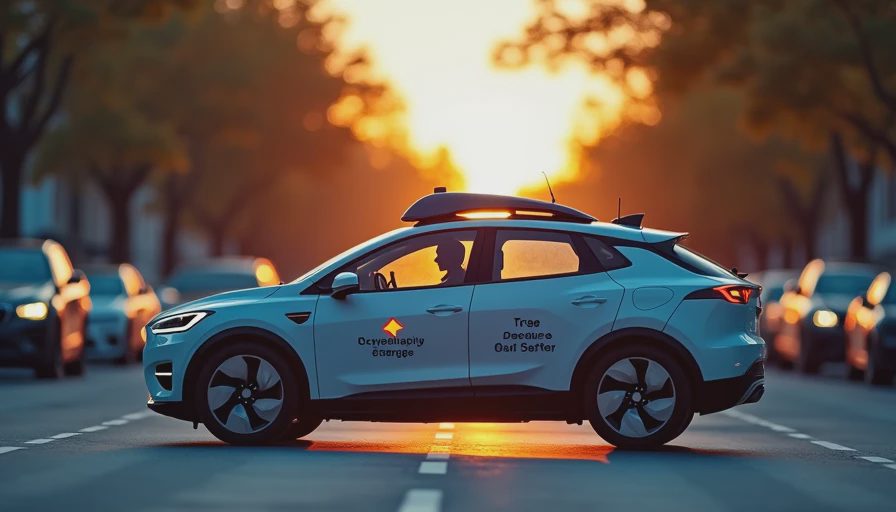
Tesla’s Full Self-Driving capability has been offered as a supervised system, meaning the driver remains responsible and must monitor the roadway. That is a fundamentally different operating design from a driverless taxi. In supervised use, the human is the fallback controller. In a robotaxi, the system is the primary controller and the remote operator is not sitting in the driver’s seat ready to grab the wheel.
This difference matters for insurance as well as engineering. A personal auto policy typically covers a privately owned vehicle according to its terms, while commercial passenger transportation can involve different underwriting, liability limits, and regulatory requirements. A driver using an assistance feature to commute is not automatically operating a commercial autonomous fleet. A fleet company carrying paying passengers would face a much larger risk model, including vehicle downtime, passenger injury claims, property damage, and cybersecurity exposure.
Before buying a car because of a future tesla robotaxi plan, ask the insurer a boring but important question: how would coverage apply if the vehicle were used to transport passengers for payment? Do not assume personal-use coverage extends to that activity. The answer can affect deductibles, liability protection, and whether a claim is accepted at all.
My test harness for autonomy claims
I score driving behavior from 1 to 5. A severity-1 issue is cosmetic, such as an awkward pause that creates no meaningful risk. Severity 3 means the driver must intervene to avoid an unreasonable maneuver. Severity 5 means the system creates an immediate collision risk or fails to respond to a clearly visible hazard.
For a tesla robotaxi evaluation, I would split the benchmark into repeatable scenarios rather than one long road trip. The suite would include a stopped vehicle near a lane line, a cyclist entering the travel path, a temporary construction merge, an unprotected left turn, a flashing emergency vehicle, a partially obscured pedestrian, and a route with degraded lane markings. Each run would record weather, lighting, traffic density, software version, intervention point, and the planned versus actual trajectory.
The most valuable measurement is not a single success percentage. It is the failure distribution. If a system completes 99 ordinary trips but repeatedly makes one dangerous mistake around a specific geometry, that corner case deserves more attention than the average. Engineers call this the long tail. Passengers experience it as a surprise.
Where the hard cases live
The tesla robotaxi problem becomes difficult when the scene violates the assumptions built into a clean training example. A delivery van may block a crosswalk. A pedestrian may stand in the roadway without moving. A work-zone flagger may use gestures that conflict with the traffic signal. A snowbank may erase the road edge. None of these situations is exotic in the real world, but each requires context, uncertainty management, and an appropriate fallback.
I also care about behavioral stability. A safe system should not brake sharply for a harmless shadow on one pass and ignore the same shadow on the next. Repeating the route three times is often more revealing than driving it once. I have run comparable tests that produced three different answers, and that inconsistency is itself a result. A service operator needs to know not only what the model usually does, but how sensitive it is to timing, sunlight, nearby vehicles, and prior route history.
A future tesla robotaxi may use cameras, neural networks, detailed maps, remote support, or some combination of those tools. The architecture matters less than the observable contract: it should recognize its limits, slow down when uncertain, and reach a minimal-risk condition when the task exceeds its confidence.
What drivers should verify before paying for the promise
Start with the current feature, not the announced destination. Read the owner’s manual and release notes for the exact vehicle hardware and software version. Determine whether the system is supervised, whether hands-on-wheel monitoring is required, and what happens when the driver ignores warnings. A subscription price or software label does not change the legal responsibility assigned to the human operator.
Then price the complete ownership risk. Get quotes for collision and comprehensive coverage, compare deductibles such as $500 and $1,000, and confirm whether rental reimbursement is included. Ask about coverage for aftermarket equipment, commuting distance, and any planned delivery or passenger use. A lower premium is not a bargain if the policy excludes the activity you actually perform.
Finally, search for evidence rather than countdowns. Look for reproducible demonstrations, intervention logs, operating-domain limits, and independent testing. A successful promotional ride is a sample, not a confidence interval. If a company publishes only highlights and no failure taxonomy, there is not enough information to estimate real-world reliability.
The current verdict
The tesla robotaxi concept is technically interesting, but the name should not be treated as proof that a car is driverless today. Supervised assistance, a limited autonomous pilot, and a commercial robotaxi network are three different products with different safety cases, insurance questions, and regulatory burdens.
My standard is simple: show the route, define the operating conditions, report interventions, preserve the raw logs, and repeat the test after each software update. Until those artifacts exist at useful scale, I will not convert a launch claim into a reliability claim. Your car talks. I check his homework.