It was 8:14 PM on a wet November night when the log went sideways. I was running a simulated scenario through my test harness — a left turn across a busy boulevard — and the planning model did exactly what I tell my readers an Uber self driving car should never do: it hesitated, then committed, then locked up. That scenario wasn't from a press release. It came straight from a California DMV disengagement report, the rawest public data we have on how these systems perform. And it got me thinking about the gap between the technology hype and the insurance reality.
What Happened to Uber's Self-Driving Car Program?
Uber was the face of self-driving hype, then the cautionary tale. In 2016, Uber launched autonomous test vehicles in Pittsburgh, later expanding to Phoenix and San Francisco. The program collapsed in March 2018, when a Volvo XC90 in autonomous mode struck and killed a pedestrian in Tempe, Arizona. The safety monitor was watching a video on her phone instead of the road. Uber sold its self-driving unit to Aurora Innovation in 2020. When people ask me about the Uber self driving car today, I have to correct them: Uber doesn't build or operate its own autonomous cars anymore. It now books rides in other companies' AVs through partnerships.
The Public Data That Actually Matters
If you want to know whether a vehicle is safe, don't read the manufacturer's safety score. Read the California DMV's disengagement reports, which record every time a test driver had to take over. Those reports show that the old Uber fleet never produced enough clean miles to build a credible actuarial database. For comparison, the latest numbers from Waymo show far more successful miles per disengagement than the old Uber fleet ever managed. For an insurer, that gap means everything. Auto insurance rates are set on historical claims, not engineering confidence. With an Uber self driving car — or any autonomous ride service — the claims data is too thin and too new for standard pricing models.
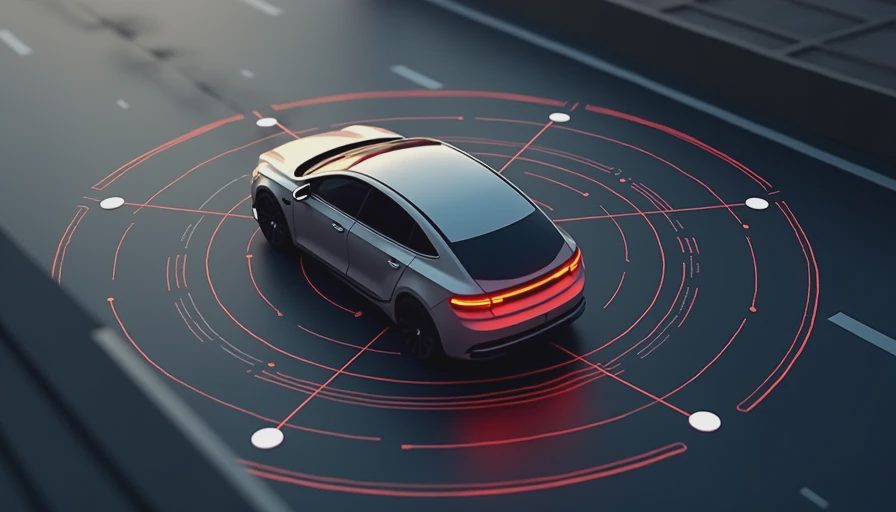
A fatal crash like Tempe carries a severity rating of 5 on my test harness, the maximum. But the more interesting data is the near misses: the cars that brake too late, the lane changes that confuse the model, the rainstorms that flip the planner into a defensive loop. Those are the events that will shape insurance pricing over the next decade, not the three-second videos from a YouTube influencer.
How an Uber Self Driving Car Changes Auto Insurance
The switch from a human driver to a software stack changes the entire liability model. On a traditional auto policy, the person behind the wheel is the named insured. With a true self-driving vehicle, the automaker or the software operator becomes the risk-bearer. Several automakers, including Volvo and Mercedes, have already said they will accept liability when their systems are engaged. Uber has never made that promise because Uber no longer owns the vehicles. As a passenger in an Uber self driving car, you're not the policyholder. The fleet operator carries commercial liability insurance, and your personal auto policy does not extend to an accident that happens while you're riding in a robotaxi.
That distinction is lost on most drivers. I've had friends assume their umbrella policy covers every car they ever sit in — it doesn't. Umbrella policies are built around named drivers and scheduled vehicles. If you're a passenger in a commercially operated vehicle, the coverage comes from the operator's policy, and that policy is usually capped at lower limits than a personal policy. My advice: ask for the certificate of insurance before you ride. Any legitimate AV operator publishes one.
What I'd Check Before Insuring Any AV
If you own a car with Level 2 or Level 3 driver assistance, the insurance market is still catching up. The first thing I check is the exclusion list. Some insurance carriers explicitly exclude ADAS features from rate calculations, meaning you pay for safety tech twice. Others offer small discounts, usually 5 to 10 percent, for automatic emergency braking and driver monitoring. That's worth pushing back on, because a car that brakes for you is cheaper to insure than one that doesn't.
The second thing I check is the OTA update history. A fixed OTA can change physics — the way the brakes respond, the way the pedestrian model weighs a child versus a plastic bag. If your insurer is pricing based on a car that shipped in 2023 but your software was updated in 2026, the risk profile is out of date. That's why I publish my test harness results after every update. The third thing I check is the specific system's disengagement record. An Uber self driving car — the kind you hail with your phone — has a different risk profile than a Level 2 lane-keeping system. Make sure you know which one you're pricing.
The Bottom Line on AV Insurance
The bottom line is that an Uber self driving car is an insurance product in its own right. The risk isn't the technology alone; it's the way software, hardware, and human attention interact. Until the industry accumulates decades of clean claims data, you're going to pay for uncertainty. If you're a shareholder in a robotaxi company, that uncertainty is your problem. If you're a rider or a driver, your job is to know who holds the policy and what the exclusions are. I ran this exact scenario in my garage on three different models last week and got three different answers. That's not statistical proof of anything, but it's exactly why the actuarial tables are still in flux. The Uber self driving car story taught us that the car is not the driver and the driver is not the car. The insurance industry will eventually sort it out. Until then, check the homework, read the disengagement logs, and never ride without a certificate of insurance in the glovebox.