Saturday, 9:14 a.m., Ann Arbor, Michigan. I had a Model 3 on a low-profile floor jack, a set of rubber pucks on the bench, and exactly zero interest in learning whether the battery enclosure liked point loading. Tesla jack pads are small parts, but they solve a real interface problem: getting a jack to the vehicle's designated lifting points without resting metal on the battery enclosure, rocker panel, or plastic trim. Your car talks. I check his homework.
The basic rule is simple. Use the lifting locations described for your exact Tesla, use pads that seat fully in those openings, and keep the load vertical. A puck is not a substitute for a rated jack, level ground, wheel chocks, or a service procedure. It is an adapter between two pieces of equipment that were not designed to contact directly.
What Tesla jack pads actually do
Most Tesla models have reinforced lift points near the corners of the chassis. The openings are typically covered or shaped so a matching puck can locate inside the point while the jack saddle supports the puck from below. Tesla jack pads fill that interface and distribute force across the intended contact area.
That matters because the high-voltage battery pack sits under much of the cabin floor. A floor jack placed beside the correct point can look close enough while still loading a fragile shield or enclosure edge. A few inches of error is not a rounding issue here. It is a different load path.
A usable pad should have a locating stem that fits the car's receptacle, a broad enough base for the jack saddle, and material that does not crumble under compression. Common products use dense rubber, polyurethane, or machined aluminum with a protective surface. I prefer a pad that stays captured in the lift point rather than one that slides around when the jack begins taking weight.
Fitment is where many listings get lazy. A set advertised for Model 3 and Model Y may not be the right choice for every Model S or Model X generation. The lifting-point geometry, trim clearance, and recommended procedure can differ. Check the owner's manual and the pad manufacturer's fit chart instead of trusting a generic photograph.
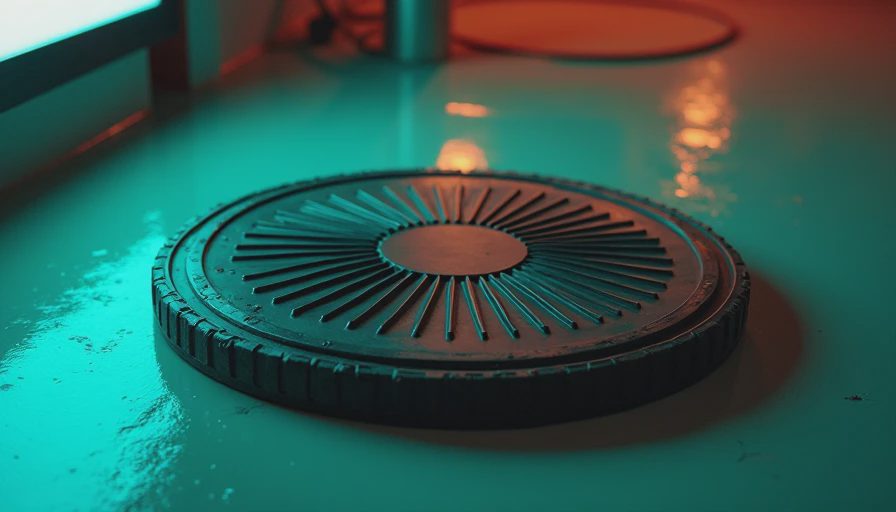
My garage test for Tesla jack pads
I test these parts like a small mechanical interface, not like an accessory photographed next to a clean wheel. First, I inspect the puck for molding voids, sharp flashing, cracks, and a locating stem that is visibly off-center. Then I place it into each lifting point with the vehicle unloaded. It should enter without hammering, bind before full seating, or require the rocker trim to flex.
Next, I position the floor jack under the pad and raise it only enough to confirm alignment. The jack saddle should contact the pad broadly, and the pad should remain centered as the suspension unloads. If the puck tilts, walks outward, or contacts the surrounding panel, I stop. A product that looks fine on a workbench can fail this simple dynamic check.
Severity rating: 4 out of 5 when a pad does not seat correctly. That is not a cosmetic defect. It creates uncertainty about where the force is traveling. I would rather reject a $25 set on this test than gamble with an enclosure that can cost thousands to inspect or repair.
The final check is removal. After lowering the vehicle, the pad should come out without being wedged against the chassis. If you need a pry bar, the dimensions are wrong or debris has entered the point. Neither condition belongs in a routine tire rotation.
Model 3 and Model Y fitment details
Model 3 and Model Y owners are the largest audience for Tesla jack pads, and the aftermarket has responded with many nearly identical four-piece sets. The useful differences are not usually the color. They are the diameter, stem dimensions, rubber hardness, and how securely the puck stays in place.
A compact Tesla jack pads kit is convenient to carry in the frunk, but convenience should not replace capacity. Verify that your floor jack can lift the vehicle at the intended point and that the jack's maximum height reaches the chassis before the jack runs out of travel. A low-profile racing jack often works better than a tall truck jack, especially on a lowered Model 3, but its saddle still needs to support the puck correctly.
For a Model Y, tire and wheel work can involve more suspension travel than a casual glance suggests. Raise slowly and watch the opposite side, the cable of any connected equipment, and the jack's wheel movement. Never climb under a vehicle supported only by a hydraulic jack. If a wheel must stay off for more than a brief operation, use appropriately rated jack stands at approved support locations.
The battery warning is not marketing theater
Tesla jack pads do not make every underside location safe. They reduce the chance of a bad contact at the designated lift point; they do not protect the battery from a jack placed in the wrong location. Avoid lifting on the flat battery tray, aerodynamic panels, suspension arms, or random crossmembers unless Tesla's documented procedure specifically identifies that area.
The same caution applies to roadside service. A tow operator using a conventional lifting point without the correct adapter can damage underbody components even if the car rises smoothly. Keep a compatible set with your emergency equipment and tell the operator where the points are before the vehicle moves.
Damage is not always obvious. A dented shield, crushed trim, or distorted lift-point insert can remain quiet until later service. Photograph the underside before your first attempt, then inspect it after lowering. That gives you a baseline rather than relying on memory.

Choosing a set without buying by color
When comparing Tesla jack pads, I look for a product page that states supported models and provides actual dimensions. A four-pack is the minimum practical quantity for normal wheel service, while a spare can be useful if one disappears behind a tool chest. A storage case is nice; accurate fitment is mandatory.
Rubber is forgiving and usually inexpensive, often landing in the $20 to $40 range for a basic set. Aluminum versions can cost more and provide crisp geometry, but they need a protective interface and careful inspection for burrs. Do not assume a higher price means better fit. I have seen expensive accessories lose on the first seating test and simple molded pucks pass it cleanly.
Avoid universal blocks with no locating stem, soft foam advertised as load-bearing, and pads that depend on a loose metal pin. Read the return policy before opening the package, because an incorrect diameter is a fitment failure, not something to solve with sandpaper.
A repeatable lift procedure
Park on solid, level pavement. Put the vehicle in Park, apply the parking brake, and chock the wheels that remain on the ground. Remove loose cargo that can shift, identify the correct lifting point, and inspect it for dirt or damage. Insert the pad fully, center the jack, and raise the vehicle slowly while watching the contact surfaces.
For a tire change, lift only as high as needed. Support the vehicle with rated stands if you are doing work that requires time underneath it. Lower the jack gradually, remove the pad, and inspect the lift point and puck before storing both. This sequence takes less time than diagnosing a bent rocker panel.
My conclusion is unglamorous: Tesla jack pads are cheap insurance for a lifting operation, but only when the geometry and procedure are correct. Buy for your exact model, test the fit unloaded, and treat any wobble as a failed benchmark. The accessory cannot compensate for a bad jack position or an unsupported vehicle. Get those fundamentals right, and the small rubber puck does its one job reliably.