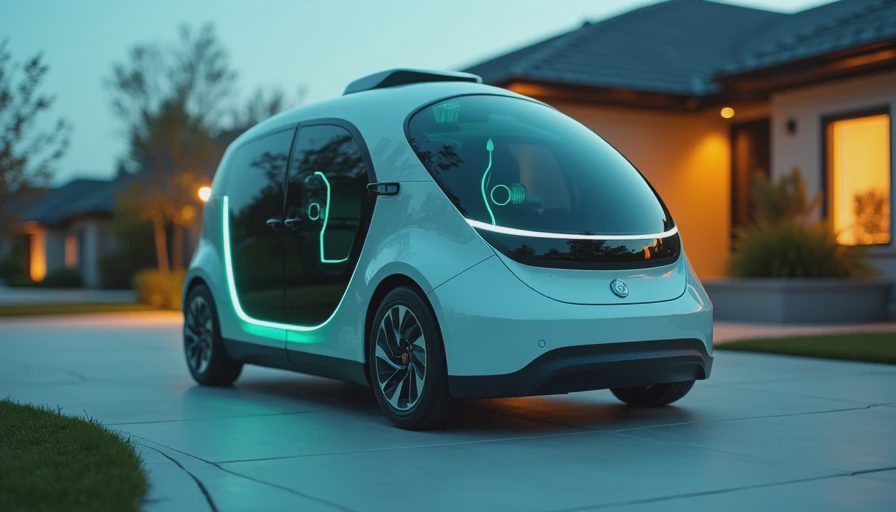
A zoox car is easy to recognize because it does not look like a conventional vehicle with a driver-assistance package bolted on. It is a purpose-built robotaxi, designed around passengers rather than a steering wheel, pedals, or front-facing driving position. That distinction matters. The interesting question is not whether the cabin looks futuristic. It is whether the complete system makes reasonable decisions when the road stops behaving like a clean demo route.
I am treating this as an engineering review, not a rewrite of Zoox marketing material. I have not claimed a personal on-road test of Zoox's production system here. Instead, I am examining the vehicle architecture, the operational design domain, available public information, and the failure modes an evaluation harness should probe. Here is what happened in the scenarios that matter. Here is what the system should have done. Here is the gap.
What the Zoox Car Actually Is
The Zoox car is a battery-electric, bidirectional vehicle built specifically for autonomous ride-hailing. It has two opposing seating rows, no traditional front or rear in the passenger sense, and no conventional cockpit for a human driver. That layout creates a cleaner packaging problem than retrofitting a Toyota Highlander or a Chevrolet Bolt with sensors and computers.
The upside is obvious: Zoox can place cameras, lidar, radar, compute, and redundant vehicle systems around a platform designed for them. The downside is equally important: a passenger cannot simply take over if the planner gets confused. In a privately owned vehicle with advanced driver assistance, the human remains the fallback controller. In a Zoox car, the fallback is the autonomy stack, a remote assistance process, or a controlled stop.
That changes how I score it. A hesitation that feels mildly annoying in a driver-operated car becomes a usability problem when the rider has no steering input. A bad lane choice is not just an awkward moment; it is evidence about prediction, routing, and recovery behavior.
The Sensor Stack Is Not the Score
Zoox has publicly described a sensor suite built around multiple sensing modalities and overlapping coverage. Lidar contributes precise range and geometry, cameras provide visual classification and signals, and radar can help with velocity and object detection in conditions where camera confidence falls. That is the right general architecture for a robotaxi, but a shopping list of sensors does not prove competent driving.
The benchmark I would run starts with repeatability. Put the vehicle through the same unprotected left turn at three traffic densities. Record the nearest oncoming gap, turn initiation time, maximum deceleration, and whether the planner changes its mind. Then repeat at dusk, in rain, beside a parked delivery truck, and with a pedestrian waiting near the curb. The raw output should include trajectory, intervention or remote-assistance events, braking, and confidence transitions.
A zoox car that sees every object but selects an unreasonable trajectory still fails the test. Perception is not the finish line. The relevant metric is whether perception, prediction, planning, and controls produce a stable action under uncertainty.
The Passenger Experience Has Its Own Failure Modes
A ride in a zoox car is not evaluated only by collision avoidance. The system also needs to make ordinary trips understandable. Can a passenger identify the pickup point? Does the car explain why it is waiting? Does it choose a safe drop-off instead of stopping directly in a bike lane or blocking a driveway? Can a rider cancel, contact support, or report a near miss without digging through an application?
These are system design questions, not cosmetic details. A five-second pause at an intersection is acceptable if the cabin communicates that the vehicle is yielding to cross traffic. A thirty-second pause with no explanation feels like a frozen inference process. Riders do not see object tracks or planner state. They see a machine that either acts or does not act.
The cabin also creates unusual human-factors problems. With seats facing each other, passengers may be watching one another instead of the road. That is comfortable during a smooth trip and unsettling during hard braking. A useful test should measure longitudinal jerk, lateral jerk, stop-line accuracy, and how often the vehicle makes late corrective movements. Smoothness is not proof of safety, but roughness is observable evidence that the control loop needs work.
Where the Hard Cases Live
The easy route tells us almost nothing. The useful zoox car evaluation is a matrix of awkward situations: temporary construction, a police officer waving traffic through a red light, an emergency vehicle approaching from behind, a cyclist moving unpredictably around a parked car, and a pedestrian stepping off the curb after the vehicle has committed to a turn.
I would assign each event a severity from 1 to 5. Severity 1 is a harmless pause or conservative reroute. Severity 3 is an uncomfortable maneuver that creates a small but real conflict with another road user. Severity 5 is a collision, a near collision requiring emergency braking, or a failure to recognize a clearly presented hazard. The score is not a legal finding. It is a consistent way to compare releases.
For every event, the log needs a timestamp, location type, weather, route context, actor behavior, vehicle action, and expected action. Without that information, “the robotaxi acted weird” is a story, not a reproducible bug report. The difference matters when an over-the-air update changes behavior three weeks later.
How I Would Compare It With Other Robotaxis
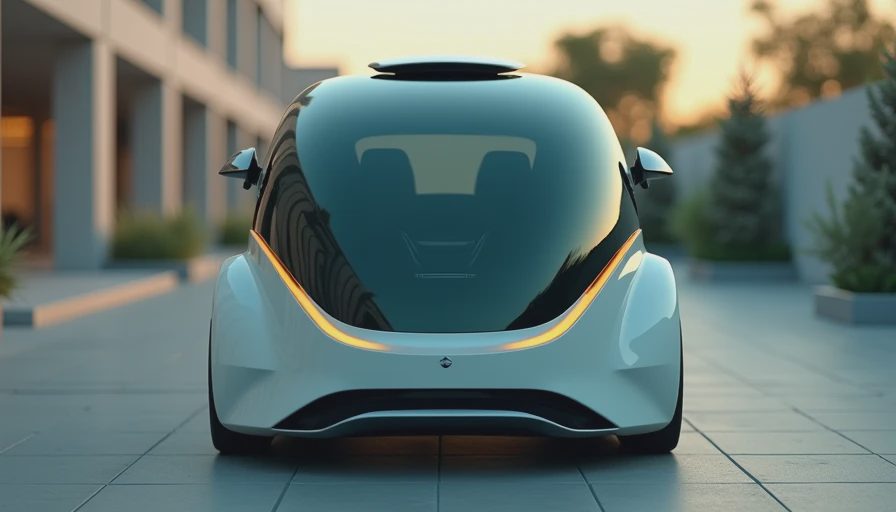
A zoox car should not be compared with a consumer car using only top speed, range, or screen size. The fair comparison is operational. What roads does each service actually cover? What happens outside the mapped area? How often does the vehicle request remote assistance? How long does it take to resolve a blocked route? Does the system recover from a stopped bus without repeatedly selecting the same impossible path?
Waymo provides a useful comparison point because its robotaxi service has also emphasized geofenced operation and a purpose-built safety case around constrained deployment. That does not make one system automatically better. It means the test must hold the environment constant. Run the same construction-zone route, the same curbside pickup, and the same unusual yielding scenario where possible. Comparing a carefully selected Zoox demonstration with a difficult Waymo service trip produces marketing theater, not data.
The same rule applies to Tesla. A consumer vehicle with supervised driver assistance and a geofenced commercial robotaxi are different products with different fallback assumptions. Treating their intervention numbers as interchangeable would be a category error.
What Riders Should Check Before Booking
If you are considering a zoox car where service is available, start with the service boundary and pickup instructions rather than the futuristic cabin. Confirm whether your destination is inside the active operating area, whether luggage fits the available space, and what support channel exists if the vehicle cannot complete the trip. Keep your phone charged. That is basic advice, but a rider without control of the vehicle needs a reliable way to communicate.
During the trip, watch for late braking, repeated route attempts, unexplained stops, or a drop-off that leaves you exposed to moving traffic. A single conservative pause is not a failure. A pattern of indecision is more informative. Save the trip details and report specific events with time and location instead of writing only that the ride felt strange.
The zoox car is most compelling as a controlled experiment in vehicle design and autonomous operation. It is not evidence that autonomy is solved. The architecture removes familiar compromises, which is valuable. It also removes the human takeover that hides many weaknesses in consumer systems. That makes every awkward decision easier to see.
The Bottom Line From the Test Bench
My current conclusion is deliberately narrow: the zoox car is an interesting platform, not a blank check for autonomous-driving claims. Its purpose-built layout, sensor redundancy, and constrained operating model are sensible engineering choices. They reduce some retrofit problems while creating a higher standard for recovery, communication, and fail-safe behavior.
The next useful test is not another launch video. It is a repeated route with released logs, clearly defined severity ratings, and before-and-after results following a software update. I want to know whether the same edge case disappears, moves, or returns with a different symptom. Until that evidence is available, I will keep the score provisional.
Your car talks. I check his homework.